Bibliography
- Kadan, N. Nikita Kadan. Official website
- Nikita Kadan. Stone Hits Stone. — Kyiv: PinchukArtCentre Research Platform, 2021. — 80 p.


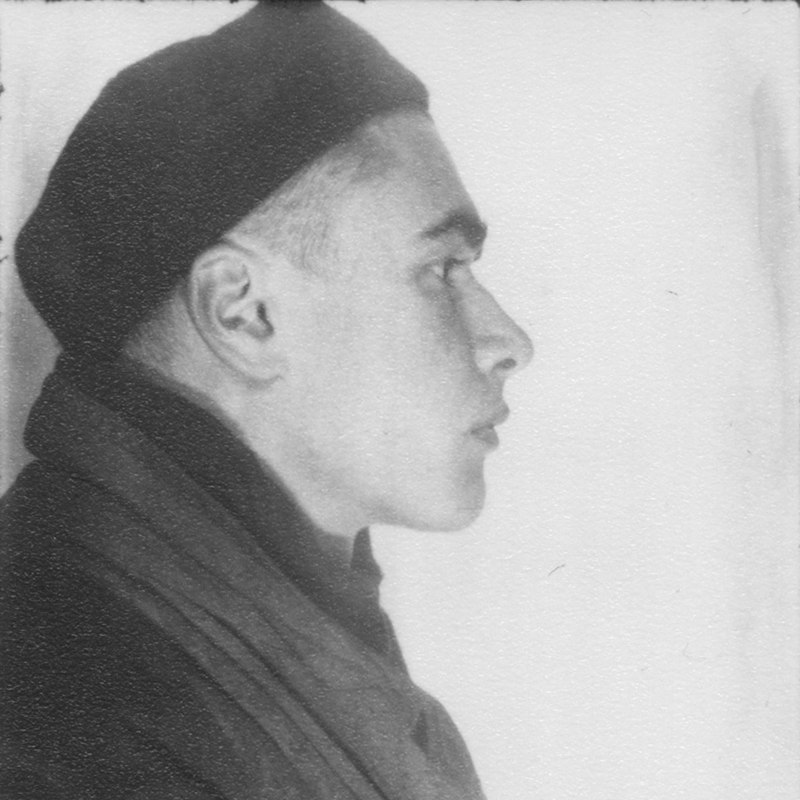
Nikita Kadan belongs to the Ukrainian artists who emerged on the art scene during the wave of the Orange Revolution. To a large extent, this historical moment defined his artistic practice, important parts of which became reflection on his position within the social and political environment, engagement in social processes, and awareness of his own political and historical responsibility.
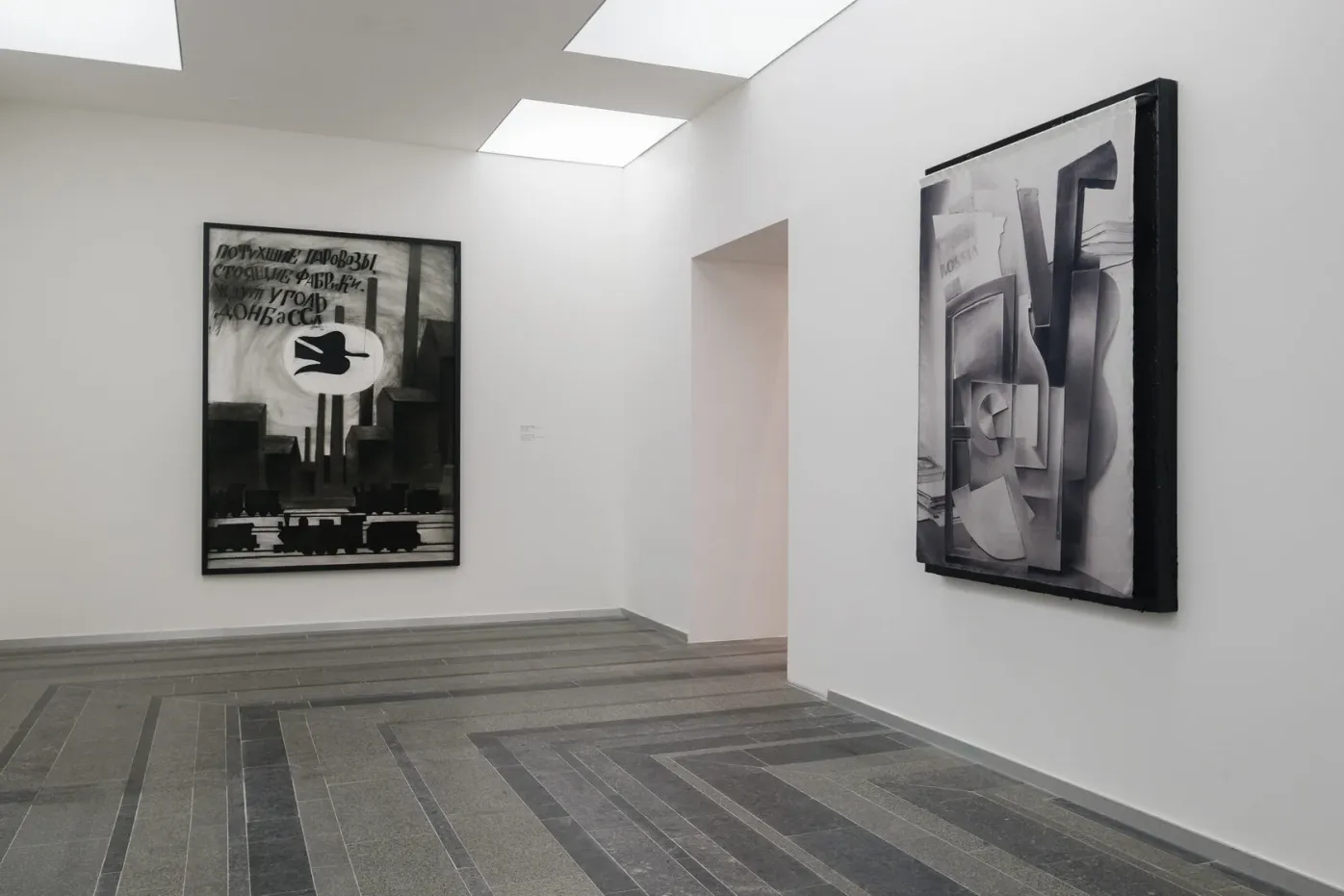
Nikita Kadan was born in 1982 in Kyiv. He received his first art education at the State Art Secondary School named after T. G. Shevchenko, after which he continued his studies at the National Academy of Fine Arts and Architecture in the monumental painting department under the mentorship of Mykola Storozhenko. The Soviet Union-inherited system of art education, which Kadan experienced firsthand, eventually became one of the objects of his artistic critique. At the same time, the visual language of Soviet monumental art became material with which the artist continues to work for many years, researching and reinterpreting it in his works.
The artist first made a name for himself in the Kyiv art community with paintings exploring media imagery and the mythology of mass culture. However, a turning point in his creative biography was his participation in the R.E.P. group (Revolutionary Experimental Space), formed during the Orange Revolution in 2004. The revolutionary enthusiasm of collective action, the desire for active participation in social and political processes became the foundation of the group and its artistic strategies. R.E.P.’s actions bore traces of revolutionary performativity and often took the form of physical or discursive interventions in public space. The R.E.P. group introduced the question of the political position and civic responsibility of the artist into Ukrainian art. All their projects were inseparable from the artists’ reflection on their own social experience, the role and potential of art in shaping society. An important component of R.E.P.’s activity was also their intention to influence their own sphere of activity through self-organization practices, initiating changes in the art infrastructure.
In 2008, Nikita Kadan became a co-founder of the curatorial association Hudrada, which aimed to fill existing institutional gaps in the art field through solidarity and interdisciplinary cooperation. Facing a shortage of curators, critics, or art managers, Hudrada became a kind of multifunctional self-governing body of the artistic community. These self-organizational initiatives of the post-revolutionary generation of artists testify to their participation in the creation of civil society structures and simultaneously serve as an artistic medium that allowed revealing the deficiencies and needs of Ukrainian society.
“At that time, we thought more about the transition from apoliticism to engagement, and also about reorganizing the art system. There was an emphasis on institutional critique and an activist position within the artistic field. And there was a lot of faith that if we pressed a certain button now, everyone would suddenly understand. Nothing like that, of course, happened” [1], recalls Nikita Kadan about the period of founding R.E.P. and Hudrada. Despite the expressed skepticism about the period of activism in art, its influence on Kadan’s individual artistic practice seems decisive. If the physical performativity of early R.E.P. actions receded into the background in the artist’s work, the performativity of the artistic gesture remained. In his artistic expressions, Kadan treats the visual image as a tool possessing transformational political potential. “An artist is a person who creates ruptures in systems of power interests, demonstrates the mechanisms by which these interests conceal themselves, and does not allow them to be shown as the ‘natural state of things” [2], Kadan comments on his vision of his own social role.
The theme of public space, actualized following the revolution by R.E.P.’s activity, remained important for Kadan’s individual practice. In the early 2010s, the artist actively collaborated with architects and urbanists, exploring antagonisms in the urban environment. For example, in the project Fixing (2010), the artist reflects on urban planning as a tool of forced fixation of the citizen’s body; in the project Neoplasm (2010), Nikita Kadan, together with architect Oleksandr Burlaka, investigates how public spaces disappear under the pressure of private interests; in Surfaces (2010), the focus is on the invasive capture of the urban landscape by advertising media; in Sellout about the total commercialization of the city that nullifies the needs of its residents. In the works The Catalogue of Opportunities and Yesterday, Today, Today, the artist draws attention to the erosion of the idea of the public under the pressure of private ideology.
One way or another, all the above-mentioned projects are built around the collision between the Soviet modernism project with its ideas of “common good” and the spontaneous capitalism of unrestrained private interest that replaced it. This historical collision is one of the central themes in Nikita Kadan’s practice.
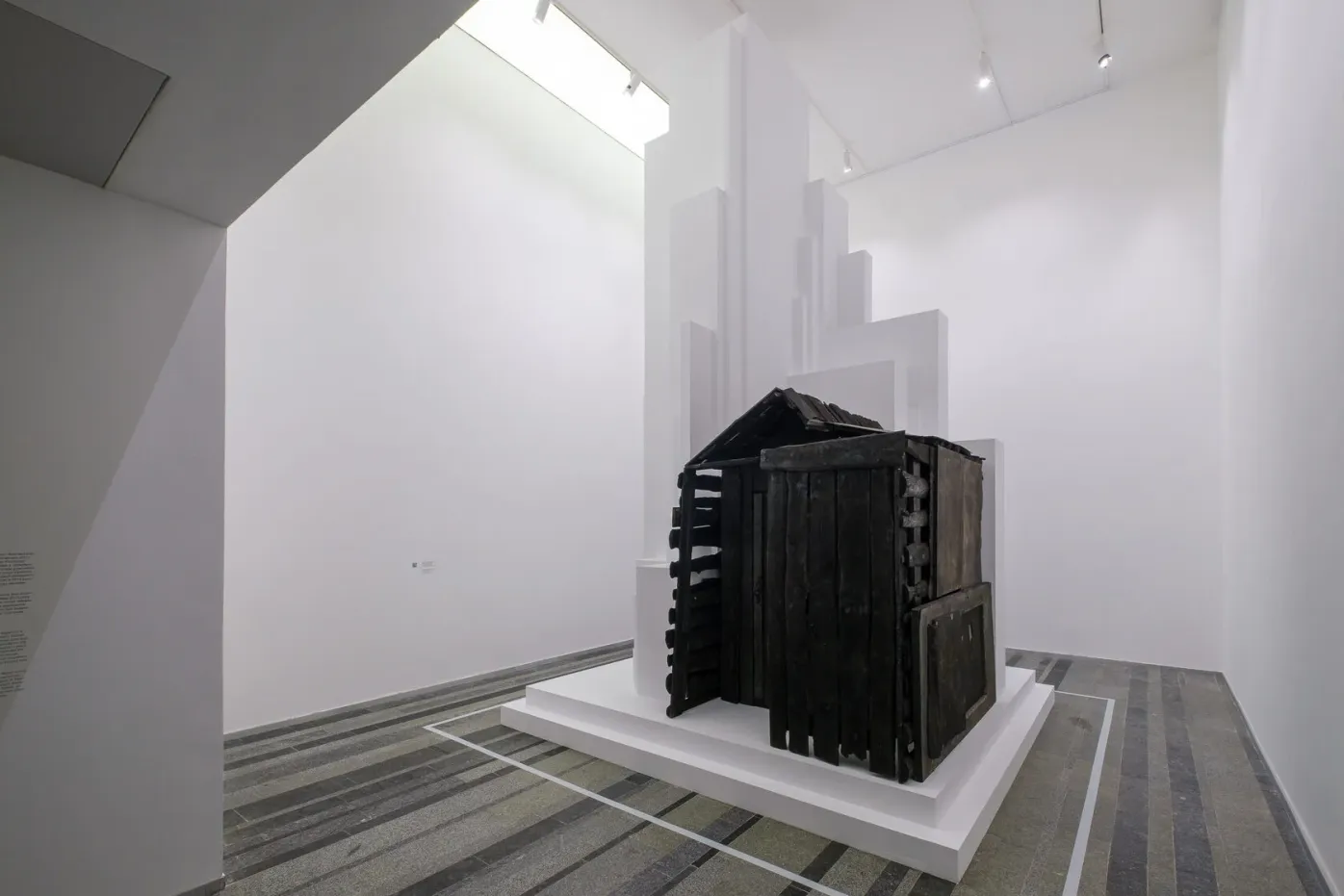
In 2011, Nikita Kadan received the main prize of the PinchukArtCentre for the work Pedestal. The Practice of Displacement, which anticipated one of the key battles over public space in independent Ukraine. “The installation consists of a large model of a pedestal standing in the exhibition hall, touching the ceiling, and a text applied to the wall. There is no longer a place for the monument that should stand on this pedestal…”[3]. The text is a chronicle of the “war of monuments” in post-Soviet Ukraine: damage and destruction of monuments, both Soviet and new national-patriotic ones. The war of monuments referred to in this work gained full-scale momentum with the adoption of the Decommunization Law in 2015. In 2021, the work Pedestal. The Practice of Displacement was acquired for the Pompidou Museum collection.
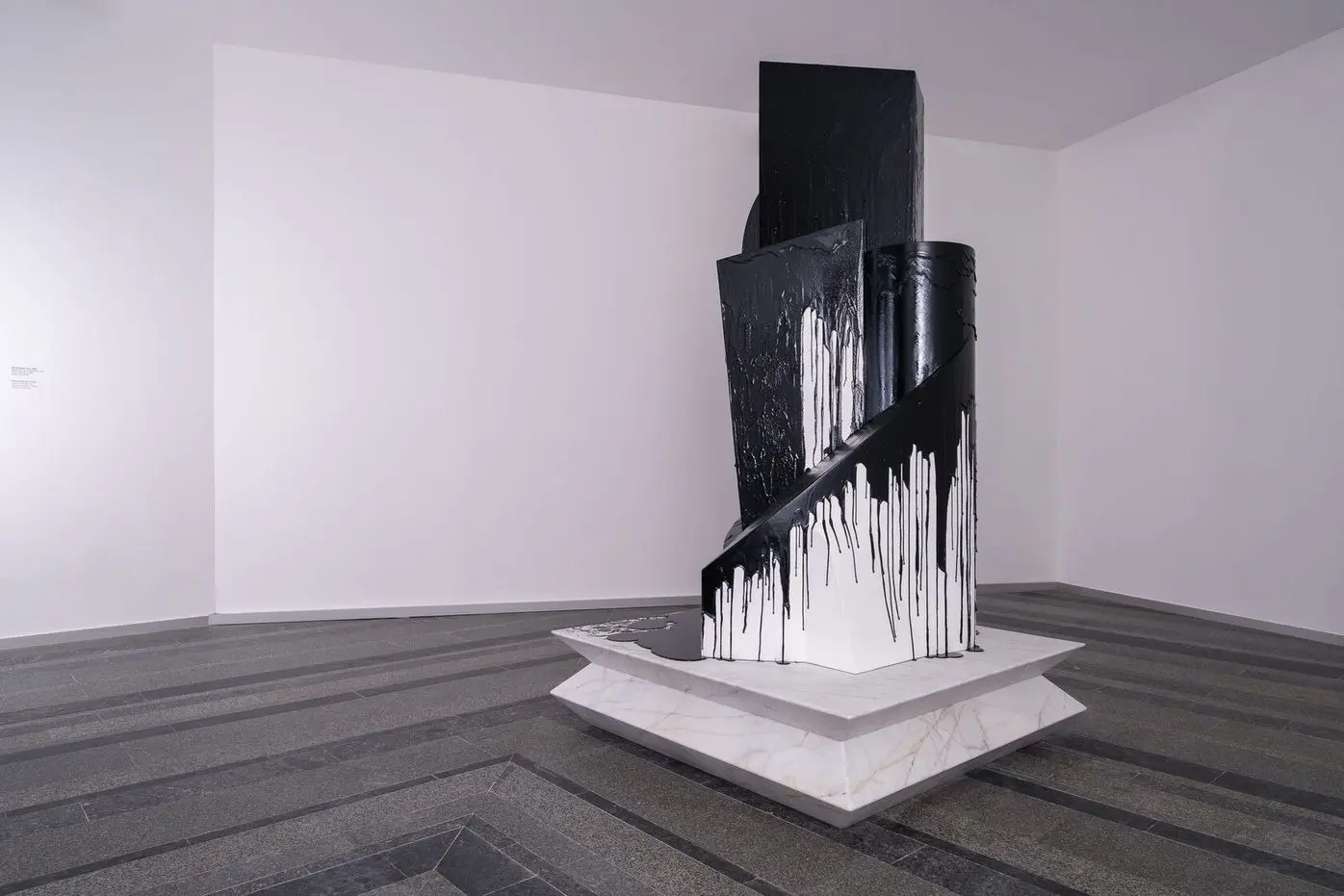
The figure of the empty pedestal became an important motif in Kadan’s visual language. He refers to it, in particular, in later works: Stylites (2015), Victory (2017), The Red mountains (2019), Anonimous. Tarred (2021). The empty pedestal in Kadan’s works is simultaneously an image of power, its absence, and potentiality, including the potentiality of the struggle for power; but at the same time, it is a political message of form, the power of the image or idea as opposed to the power of political actors.
If in his early works dedicated to urban space, Nikita Kadan’s focus was mostly on the utopian dimension of the Soviet modernist project, he nevertheless does not avoid discussing its shadow side.
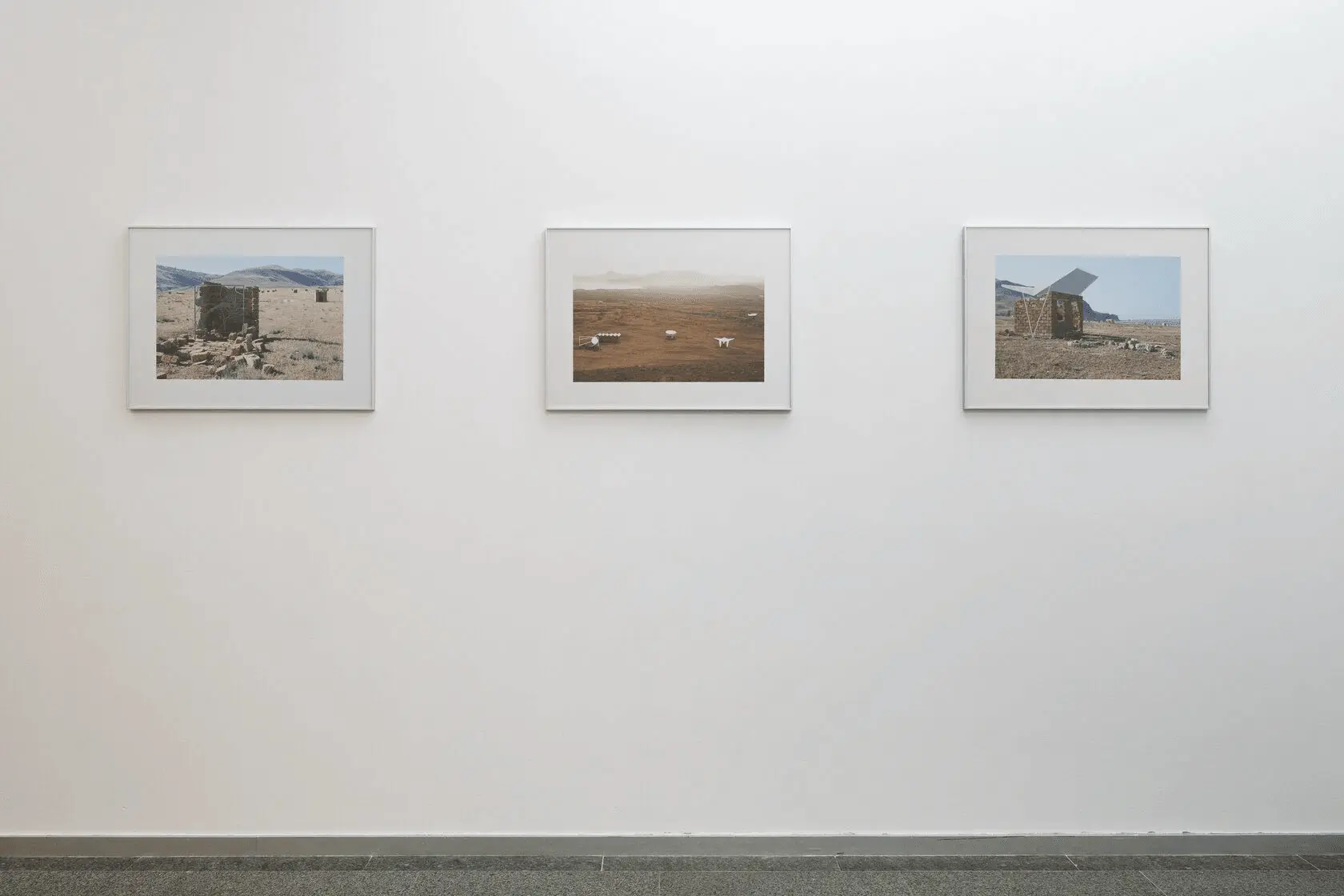
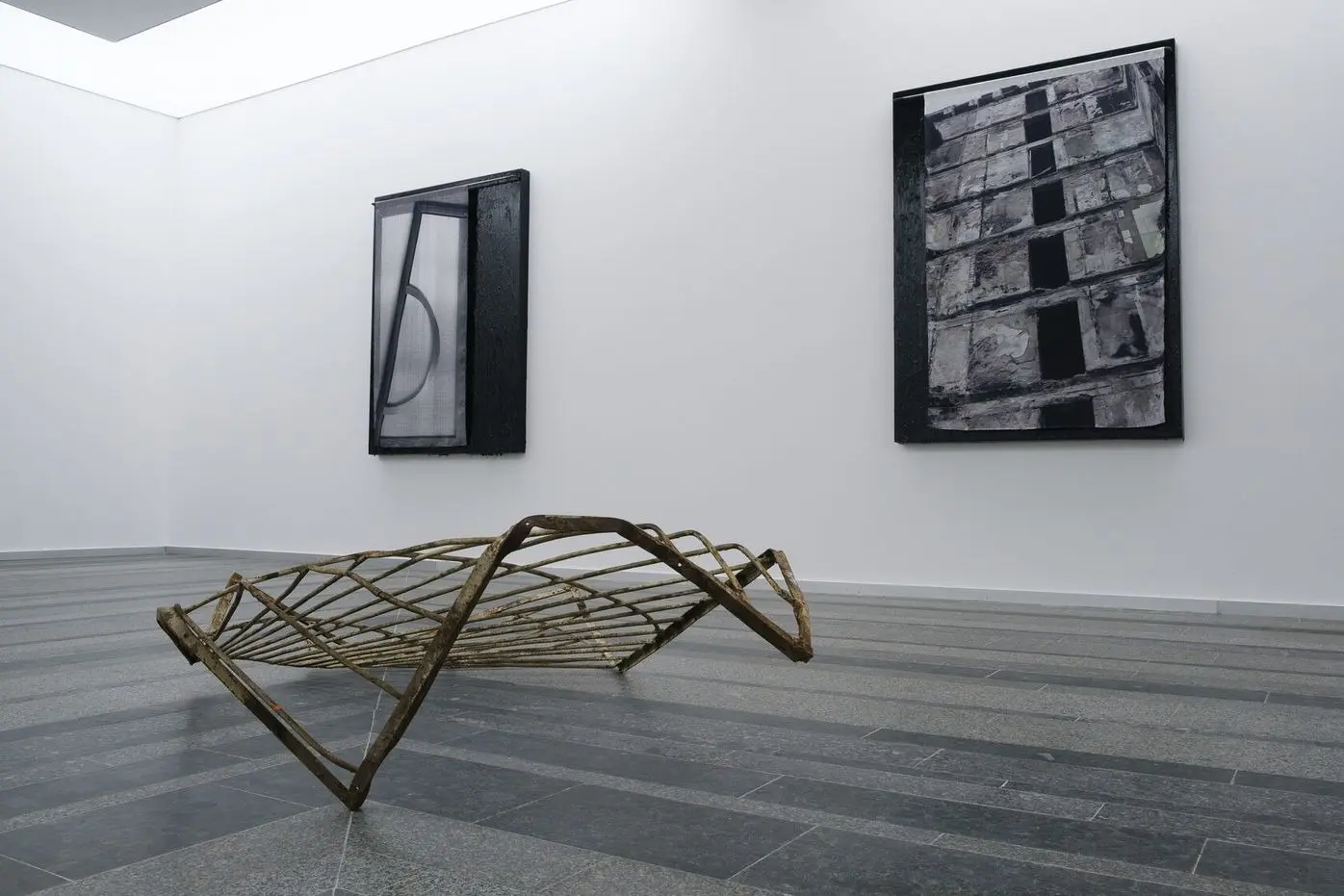
For example, the work Small house of giants from 2012 is a kind of collage consisting of a residential trailer for builders from the 1970s and a facade-model whose form refers to Soviet neo-modernist architecture of the same period. Combining the grandeur of modernist forms and the poverty of real workers’ housing, Small house of giants opens a critical discourse regarding the fictitious heroic position that workers occupied in the Soviet past. In the work Babooshka. The Mausoleum of Provision (2013), presented at the Venice Biennale, the artist applies the same dialectical approach, combining utopian and dystopian images of Soviet “socialist modernization” in the field of view. In an interview with Nastya Kalyta, Kadan himself describes this shift in his attention: “For example, in 2011 I made pale, foggy paintings with Soviet neo-modernism in winter Crimea. There was a lot of melancholy on ruins and quite unreflected pleasure in the beauty of decay in these works… Three years later, the project Everyone Wants to Live by the Sea appeared, where the dark side of Crimean modernism was revealed. Many wonderful buildings and the entire Crimean healthcare structure were built on the site of a large ethnic cleansing” [4].
This dark side of utopia is increasingly present in the artist’s reflections since the beginning of the war in eastern Ukraine. In 2014, Nikita Kadan received a special prize of the Future Generation Art Prize for the work Hold the Thought, Where Conversation Was Interrupted, which combines monumental forms of Soviet neo-modernist war memorials and the reconstruction of a fragment of the damaged exhibition of the Donetsk Regional Museum, destroyed by missile strikes.
“Soviet domestic coziness, provincial museology, and socialist modernism—compressed into one space. To think about a museum in Donetsk destroyed by artillery shells… To think about the civil war that erupted in that Soviet Union that still exists in people’s minds… To think about its great ambitions and miserable internal content… The viewer finds themselves among the scenery to play a role they have not rehearsed. What kind of narrative is this? When exactly was it interrupted?” [5], writes curator Larysa Babiy about this work.
In 2015, Nikita Kadan participated in the Ukrainian national pavilion at the Venice Biennale with the work Difficulties of profanation, where he fills the traditional exhibition showcase of the Soviet museum with artifacts of the war in eastern Ukraine, which can also be viewed as fragments of the Soviet past.
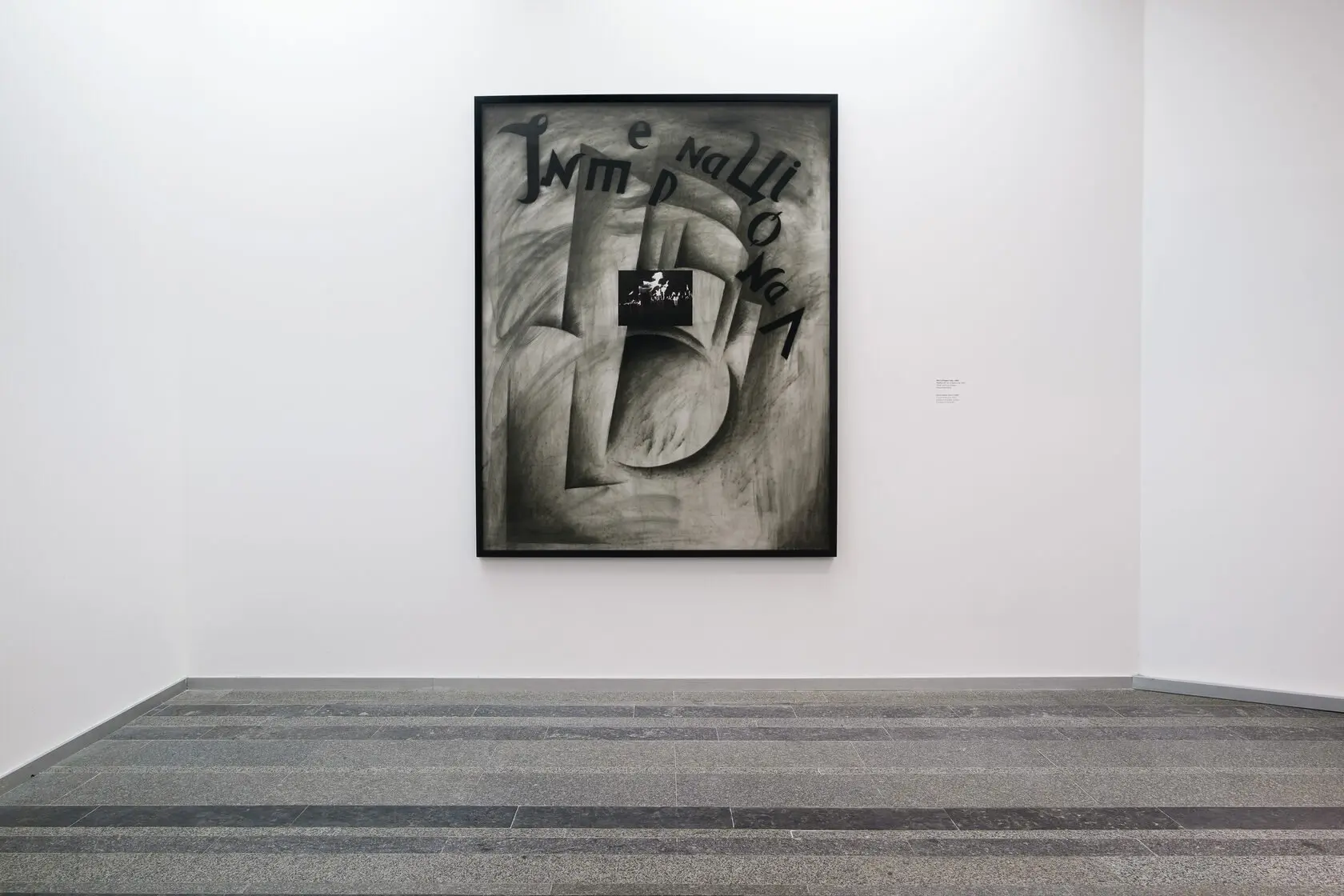
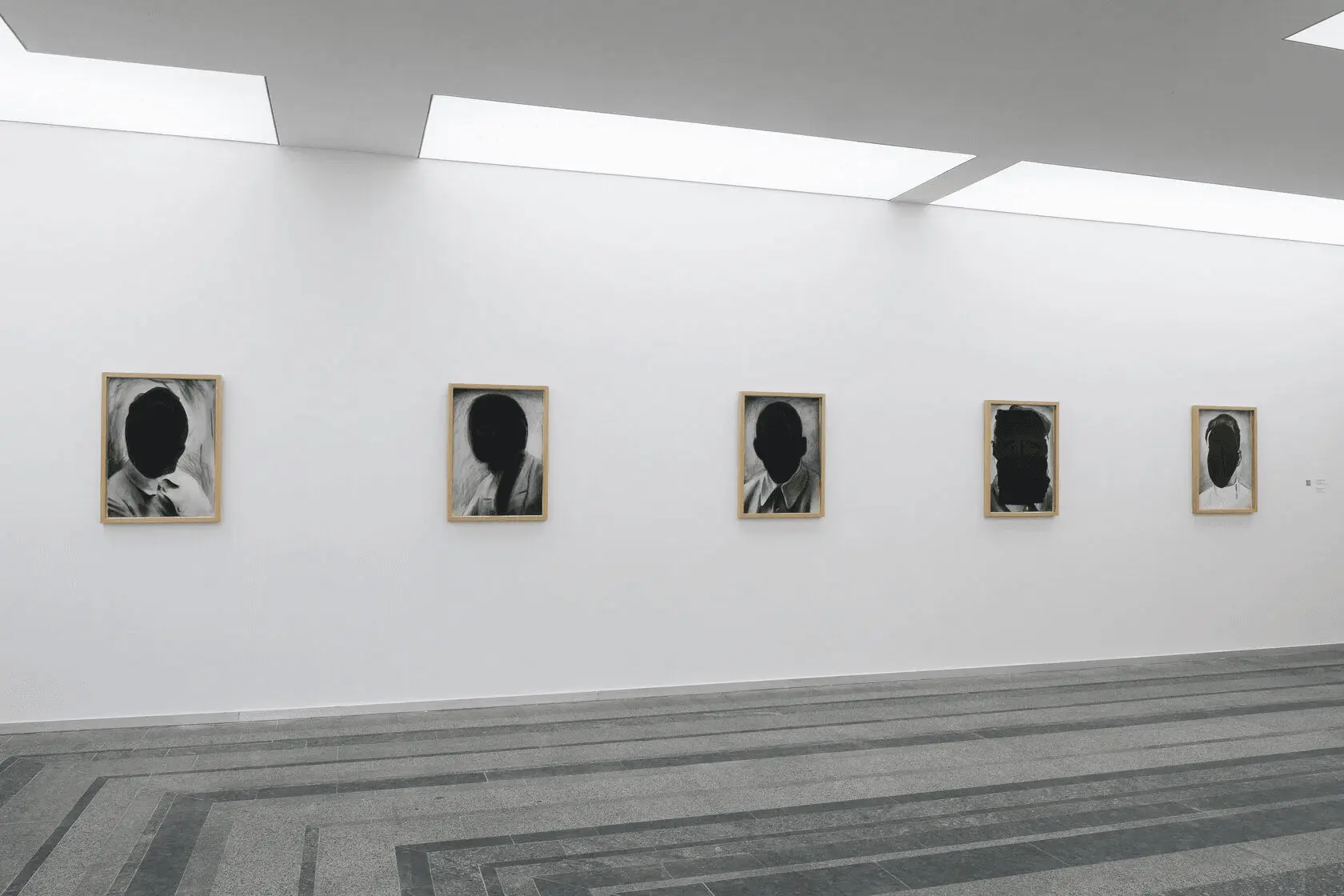
With the beginning of the war in Ukraine and the rise of internal hostility that accompanies it, Kadan begins to explore strategies of ideological instrumentalization and mobilization of images. He creates the series The Chronicle and Pogrom based on archival photographs that testify to hate crimes, addressing the history of manipulation of these images. For example, the drawings in the The Chronicle series are based on photographs documenting victims of the Jewish pogrom in Lviv, Polish and Ukrainian victims from Volhynia, NKVD victims, civilians and prisoners of war killed during the German occupation. Throughout history, the same photos were spread by warring sides with opposing captions, often swapping the roles of perpetrators and victims. “You kind of understand that what you actually see is a fake, that you were too lucky to be on the side of good ‘by right of birth.’ You are already on the right side in this fairy tale and can morally relax” [6], comments Nikita Kadan on our temptation to succumb to these manipulations. Kadan treats such an “ideologically convenient” false memory as complicity in the crime. His strategy is to remove the soothing ideological narrative that attributes any crimes to the “enemy” and to see the barbarity directly.
Thus, the theme of civic responsibility, which arose with the Orange Revolution in the activities of the R.E.P. group, developed in Nikita Kadan’s work with the beginning of the war into the theme of historical responsibility and the necessity of acknowledging collective guilt.
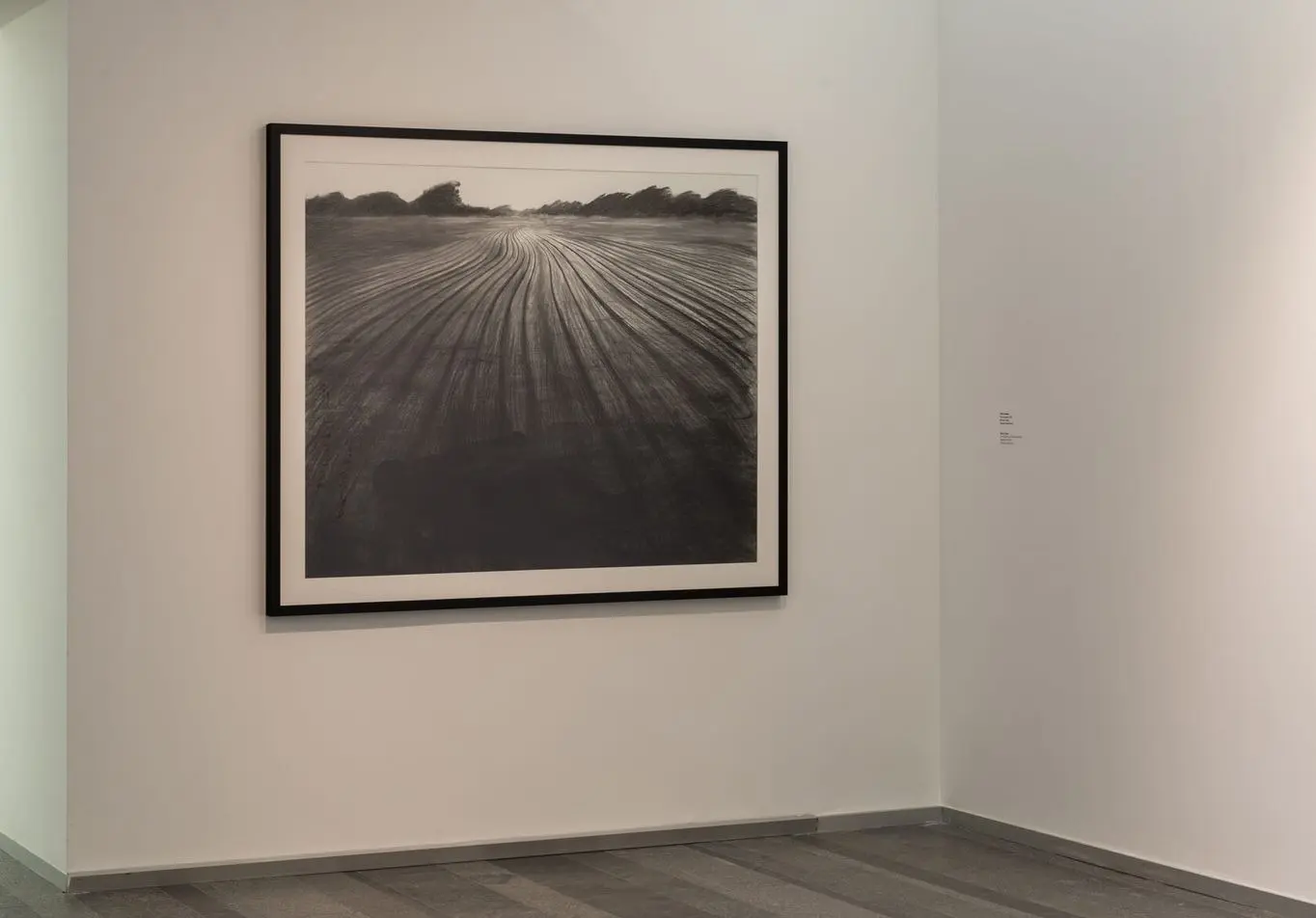
Traumatic relationships with history, but also hopes hidden in its fragments, became the leitmotif of Nikita Kadan’s solo exhibition Stone Hits Stone, held in 2021 at the PinchukArtCentre.
Delving deeper into historical issues, research, and debunking historical myths and manipulation of history for the needs of contemporary confrontations, Kadan describes his role as follows: “An artist’s work cannot replace a historian’s work. But art can capture that ‘dark air of doubt’ that exists between historical events and us” [7].