That’s Why It’s Scary: The Genius of Myroslav Yahoda
Myroslav Yahoda is a key figure of the Lviv underground and a solitary artist, a madman and a genius. In his paintings, visions of the apocalypse alternate with eerie tranquility, and death is inextricably linked with birth. Tanya Zhmurko tells about the work of this enigmatic master.
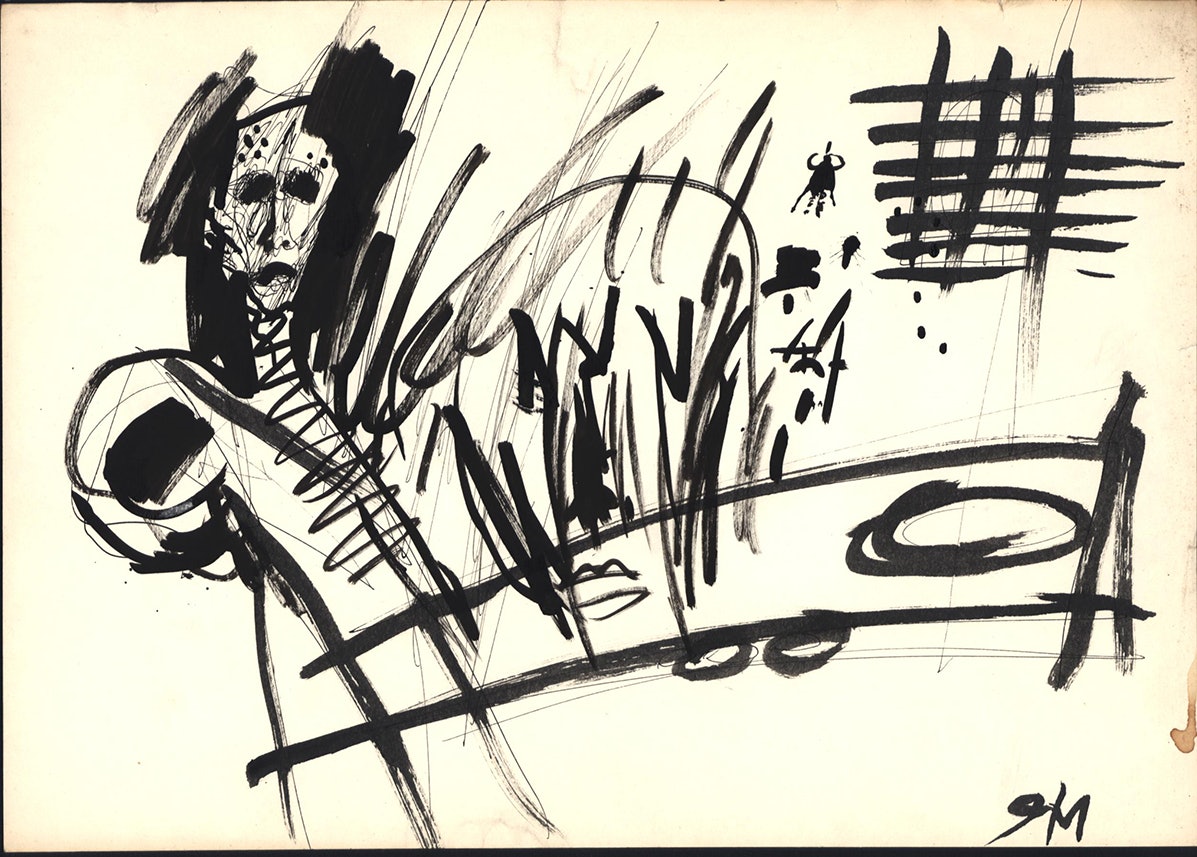
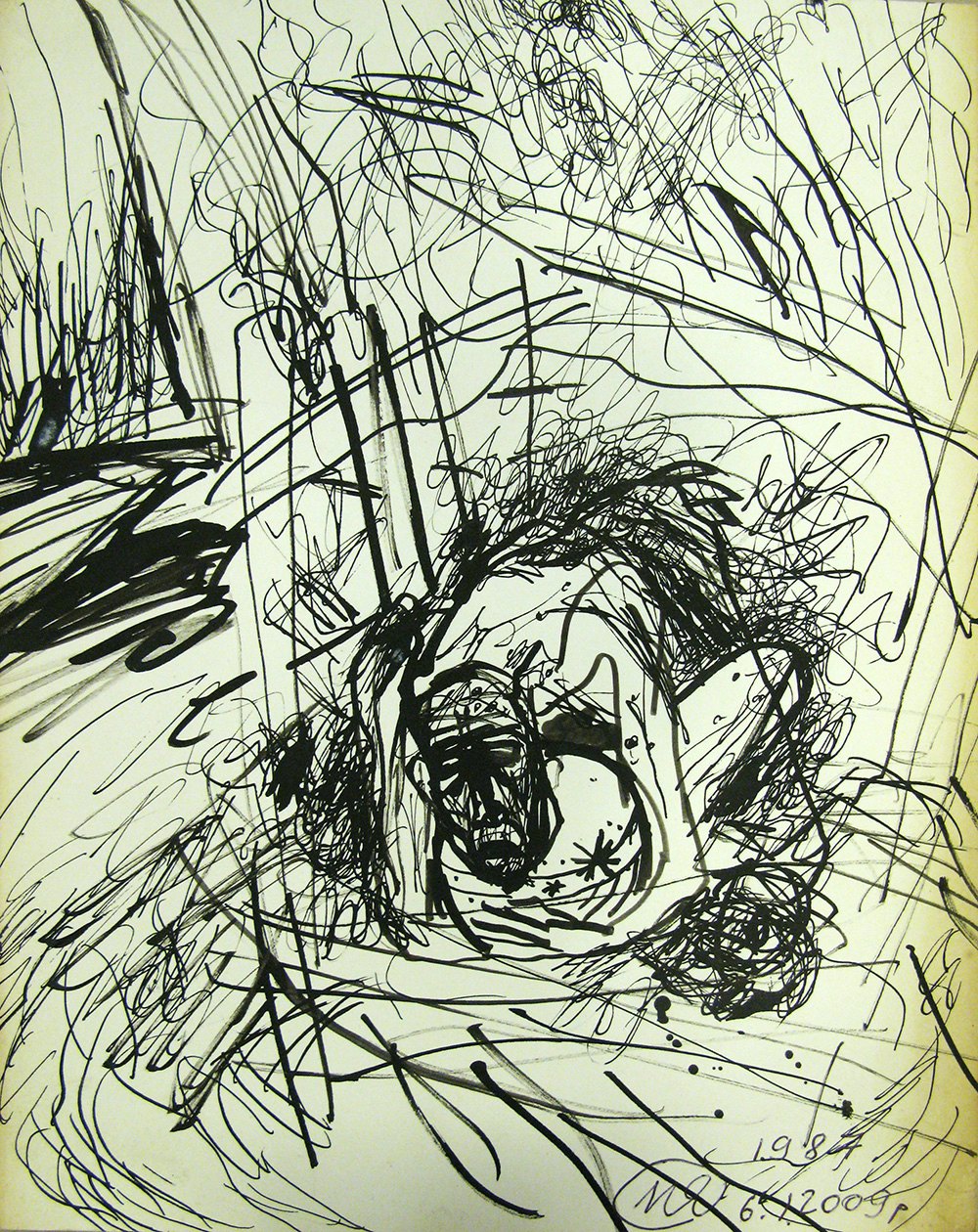
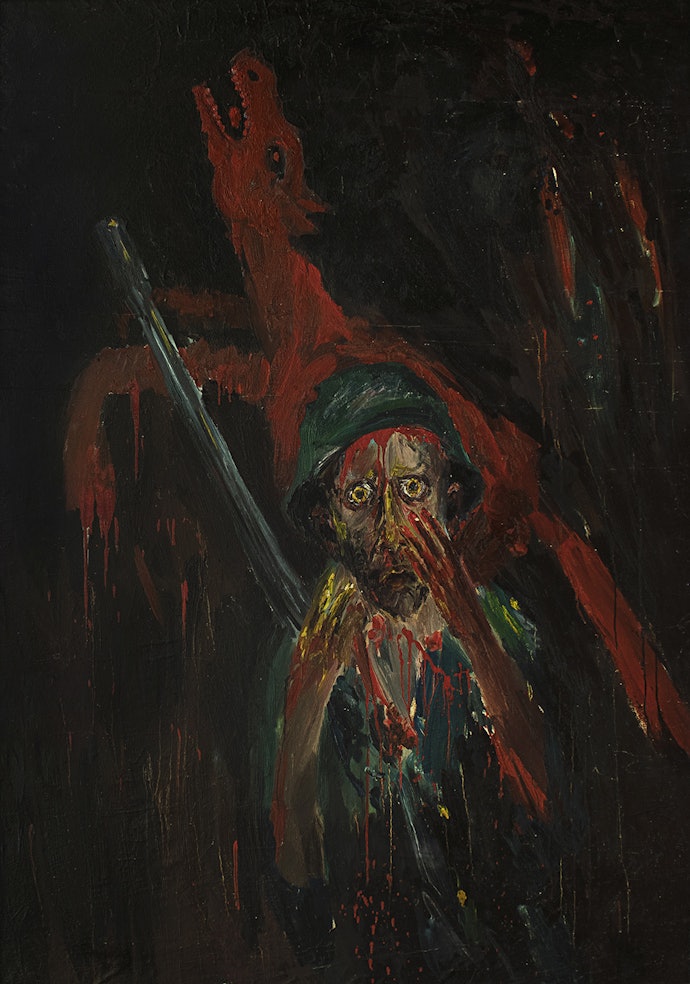
“I want to paint the Earth’s moan,” wrote Myroslav Yahoda in his manifesto “Trinity of Barbarians.” From his canvases, numerous drawings, and texts comes a painful cry of the unbearable nature of human existence. It is embedded in the very brushstroke — expressive, thick — or the line of the drawing — trembling, broken, tangled.
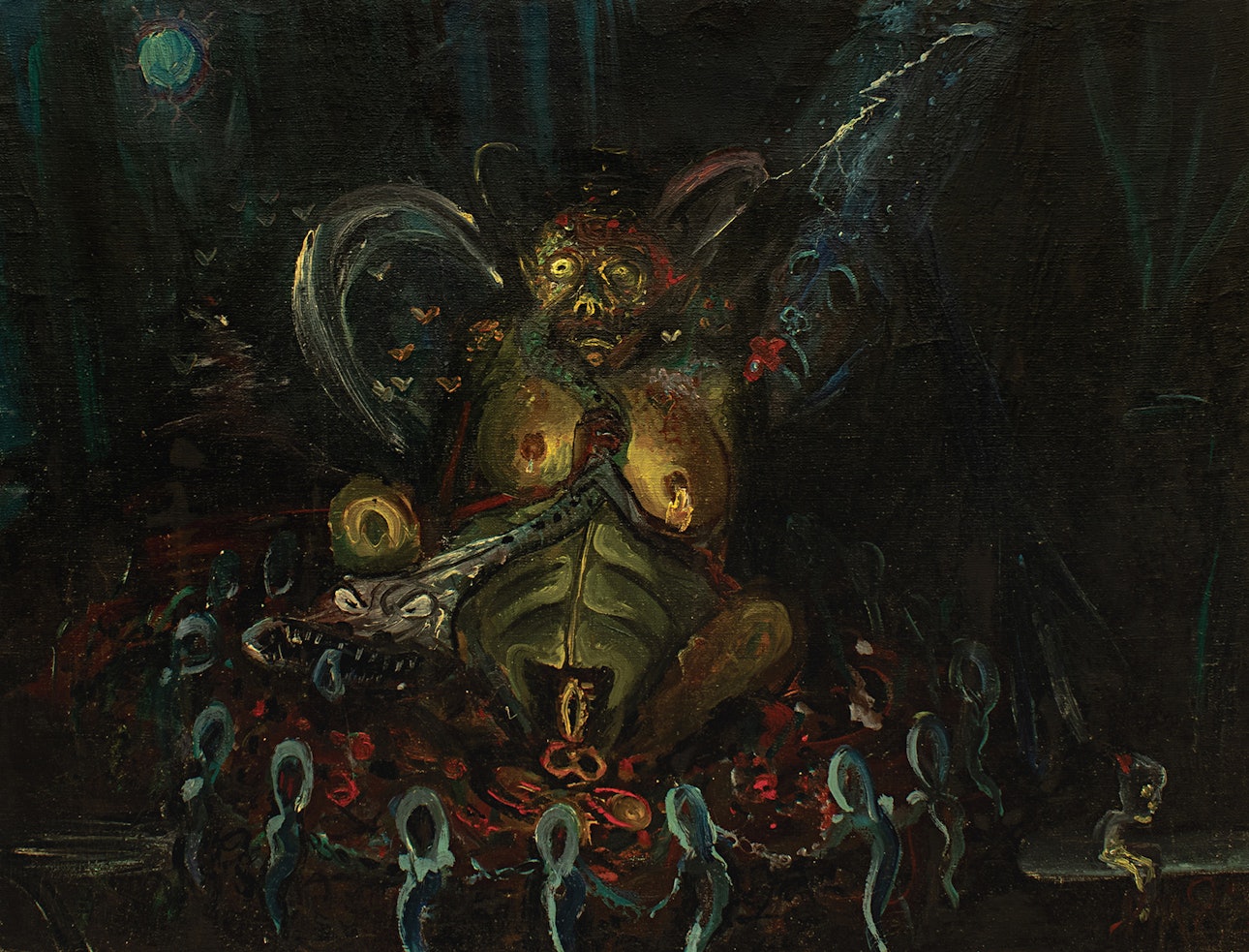
Myroslav Yahoda’s work resembles a collapse, a rapid descent, or even a fall, in which you realize the inevitable danger but cannot stop. His images — apocalypse, demons, the strange “Tsypa devouring her tribe” — arise from chthonic darkness, capturing and not letting go.

“Exiles”

“Night of the Billiard Balls,” 1993
Solitude and Fungus
The artist was born in the small village of Hirnyk near Lviv, graduated from the Ivan Fedorov Ukrainian Polytechnic Institute (now the Ukrainian Academy of Printing). His creative formation took place in the late 1980s — a time of cultural environment formation in Lviv: the first independent galleries, cultural magazines, festivals, contemporary art exhibitions. But Yahoda stood somewhat apart, was a solitary artist. He locked himself in a small semi-basement studio — dusty, smoky, cluttered with books and canvases — and worked there for long periods.
He treated his canvases as carelessly as life itself: crumpled, they were piled up or nailed to the wall, outlining the artist’s existence. Editor and cultural expert Taras Voznyak recalled: “He easily took [his works] off the stretchers — simply because he had no others. Over time, this became his trademark style. Just as the fungus eating these fantastic canvases, the craquelure, the cracks covering the canvases became a ‘trademark style,’ because Myroslav treated them mercilessly, almost fiercely, as unwanted witnesses […] of acts he wanted to hide as soon as possible.”
Otherness is often understood as abnormality and rarely forgiven — Yahoda became for many a “strange hermit.” Stories about him usually begin not with a description of his work but with labels like “strange,” “marginal,” “abnormal.” But he is as marginal as any other talented artist who found his path and goes against the artistic mainstream.



A Man Who Knows Nothing
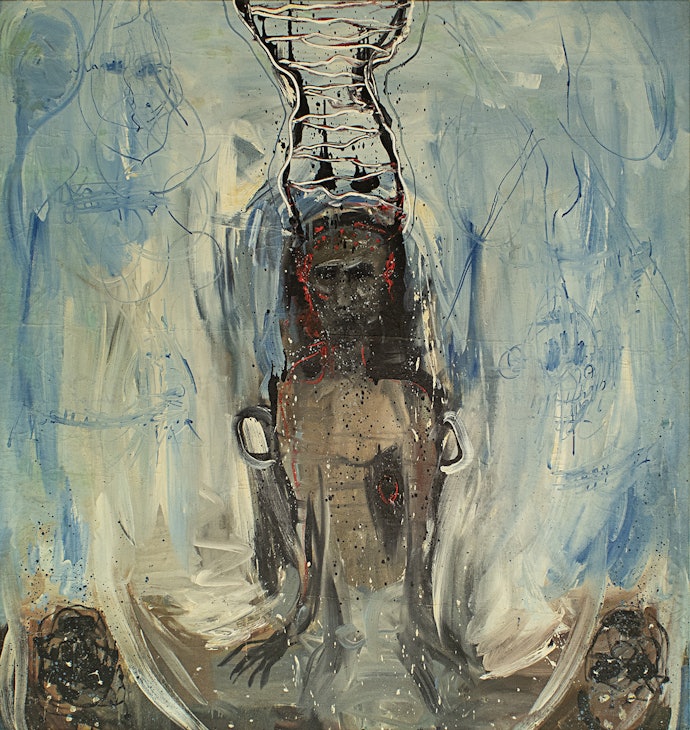
Yahoda’s early canvases are distinguished by an especially dense painterly surface: on an impenetrable, almost black background, strange anthropomorphic beings are painted in an expressive manner — tormented, suffering, as if stuck in limbo. Almost bodiless, they wander from one work to another, living endless lives. It seems the artist frees them through his art.
He treated his canvases as carelessly as life itself: crumpled, they were piled up or nailed to the wall, outlining the artist’s existence.
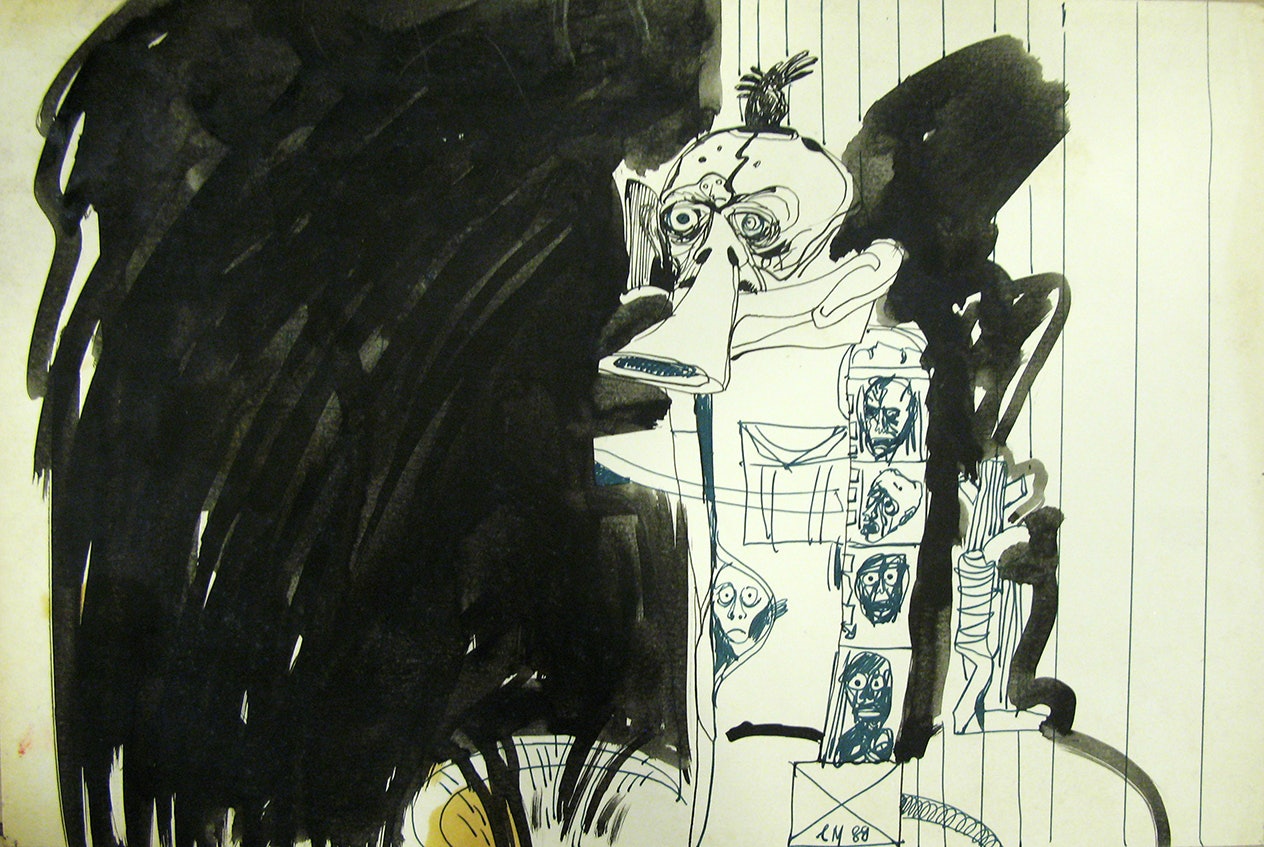
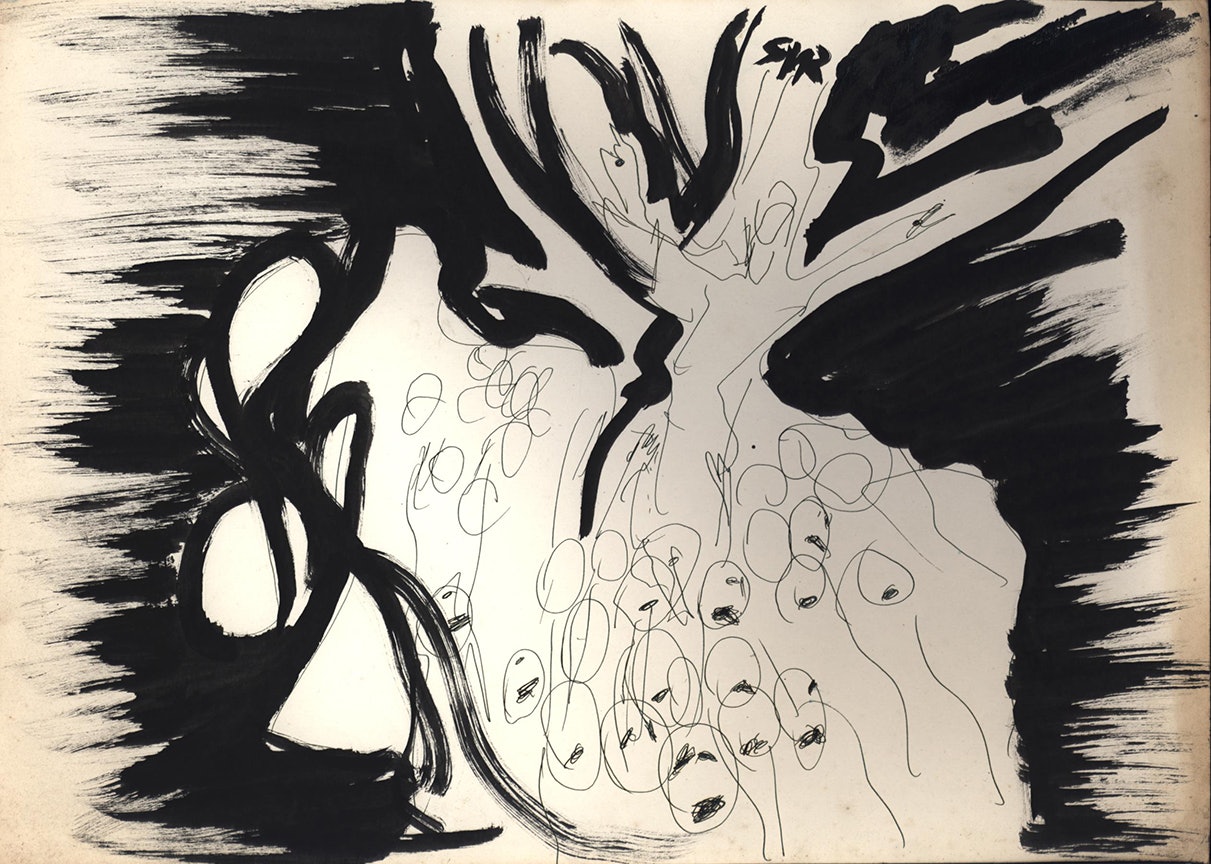
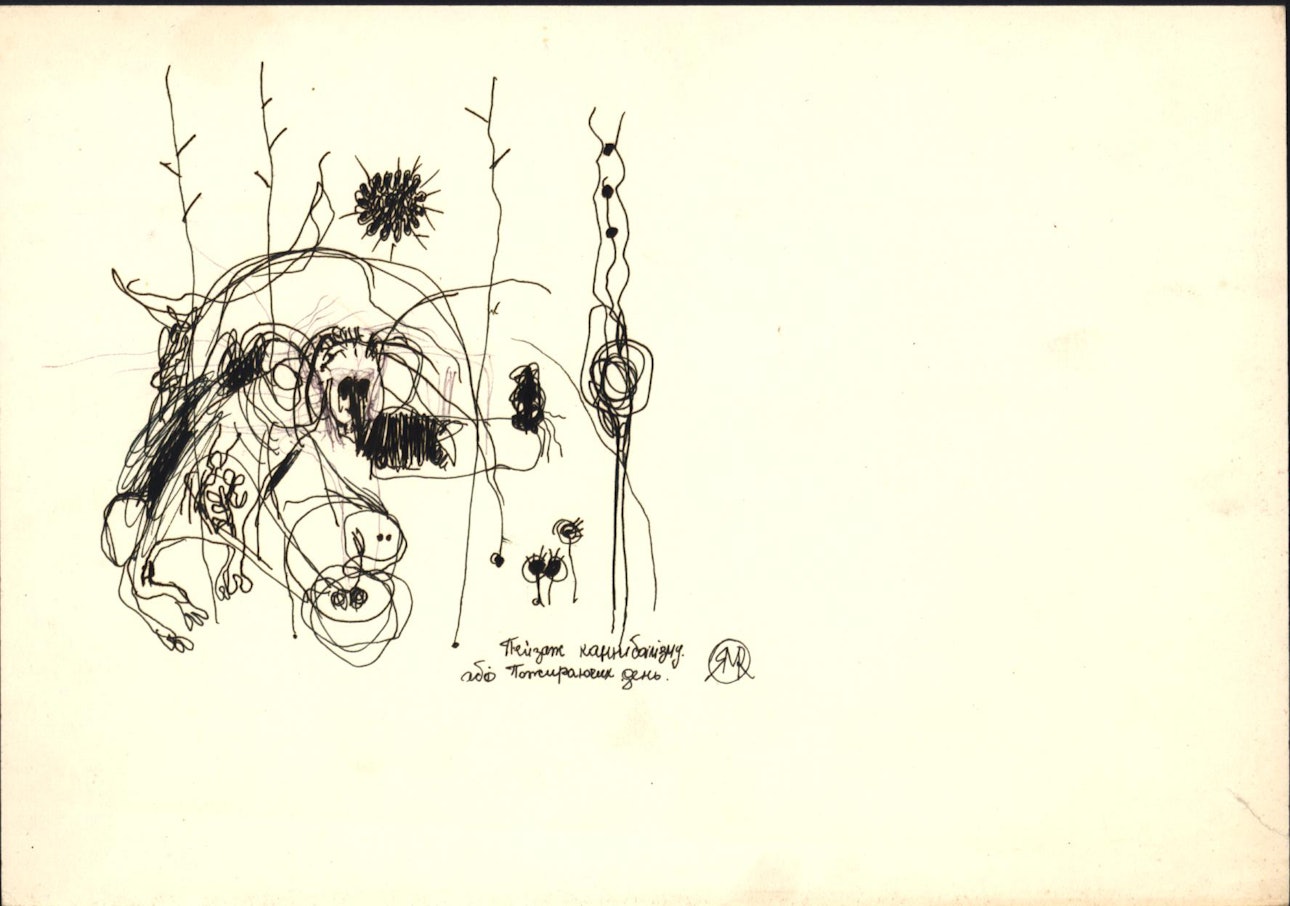
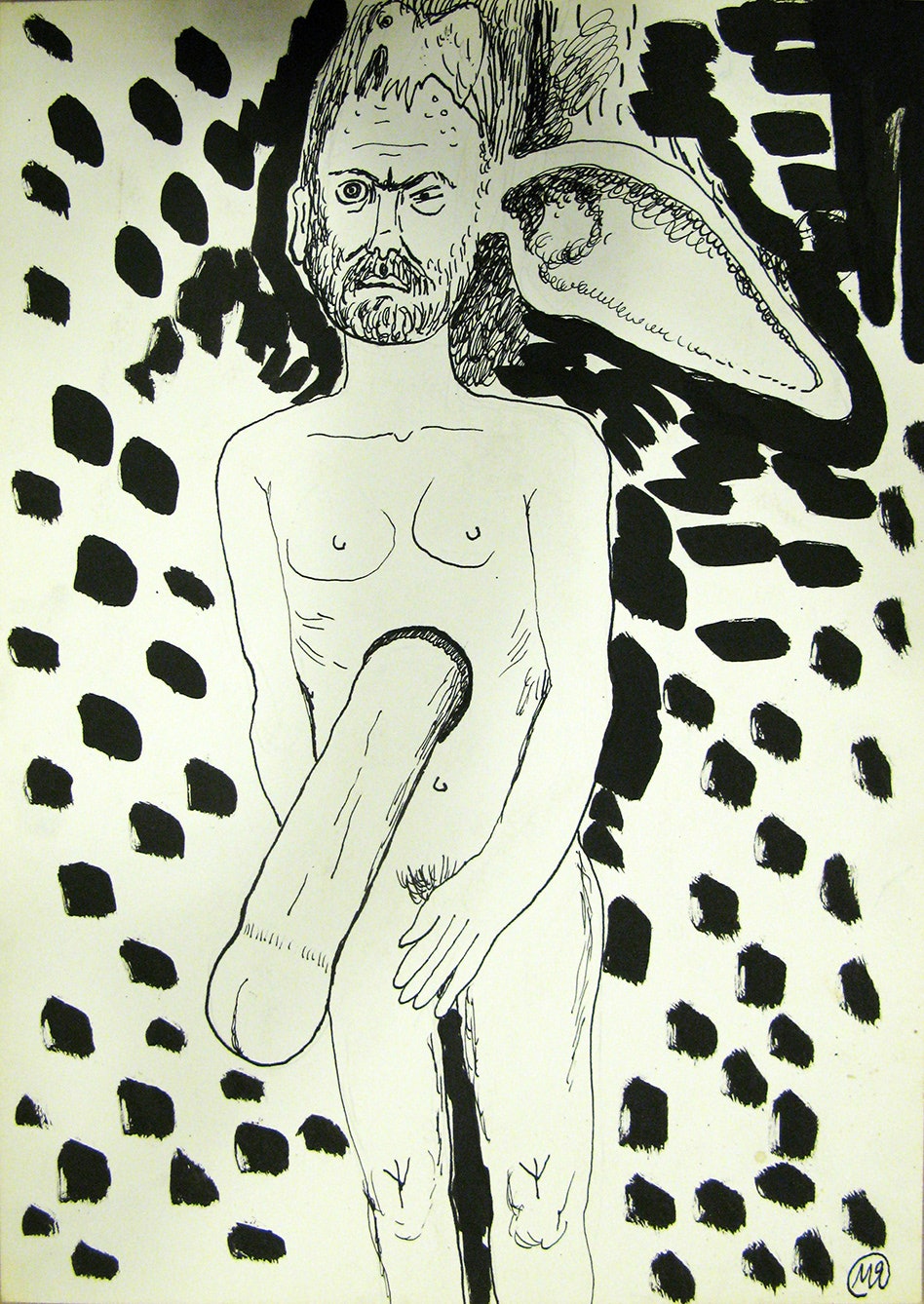
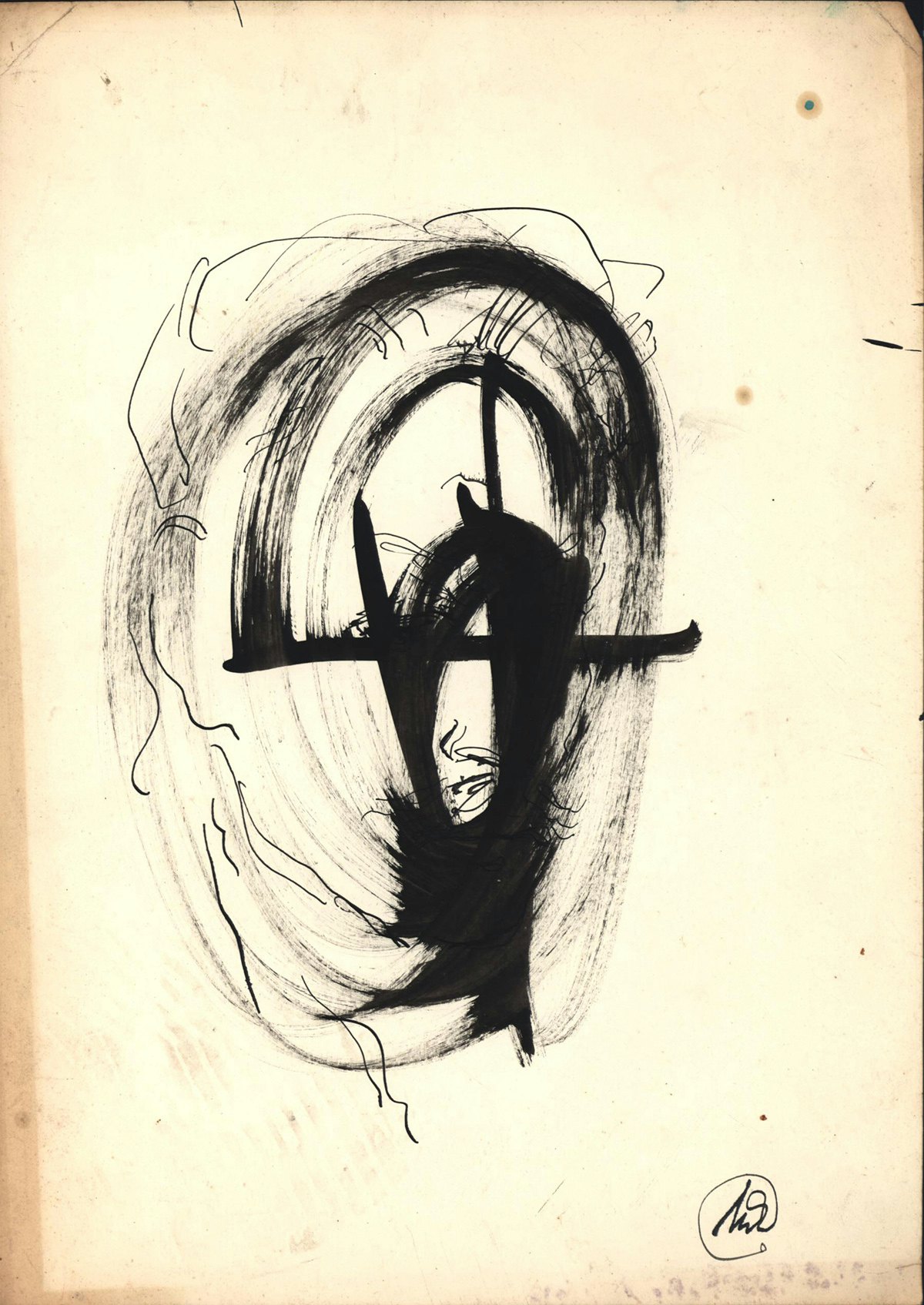
Graphics gave even more opportunities for expression — it is no surprise that Yahoda left hundreds of drawings made with ink or gel pen. The tangled black line tells its own story, somewhat reminiscent of Antonin Artaud’s works: just as in Artaud’s “body without organs” there are no specific body parts or zones of sexuality, so in Yahoda’s world there is no specific temporal localization — it is hard to say whether it was before birth or after. Everything exists in fragmented, tangled motion; his characters are entities simultaneously “not yet born,” “alive,” and “dead.”

“Hungry.” From the collection of the Lviv National Art Gallery named after Borys Voznytsky
“We Shine”

“Each of Us Is a Loaf of Bread with a Cut Piece,” 1989
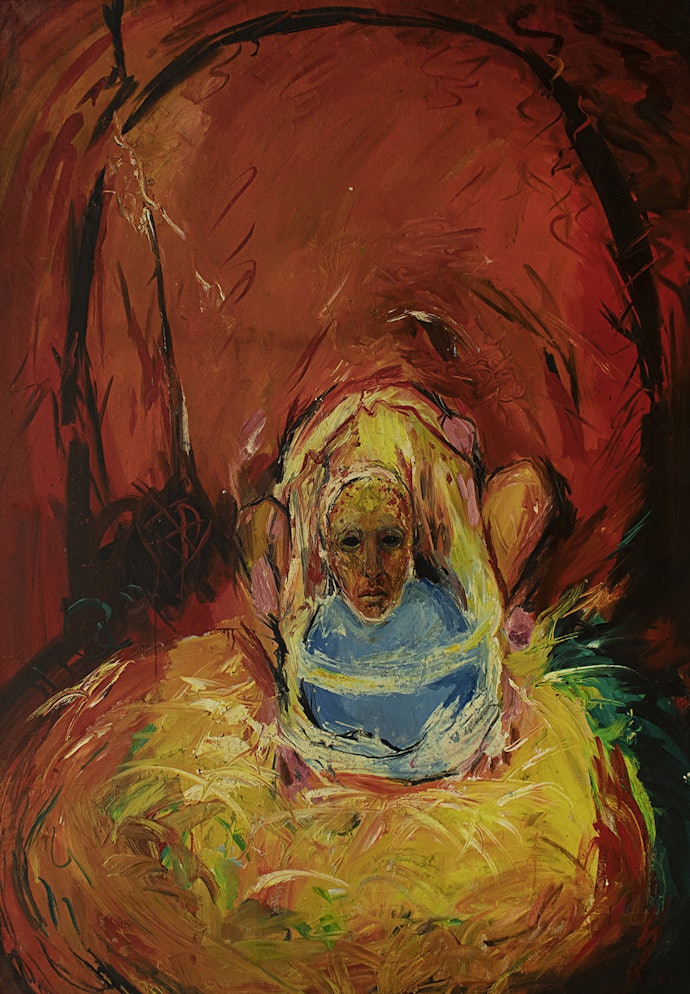
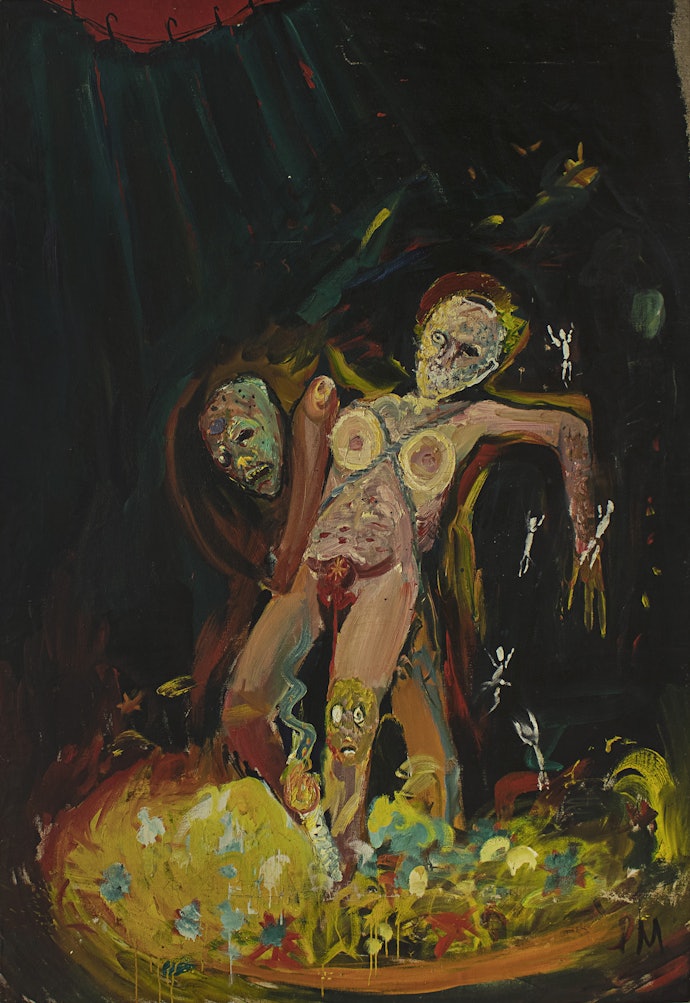
Yahoda’s works contain many allusions to religious motifs: “Black Madonna,” Christ with crazed eyes experiencing all human pain, and Christian symbolism that resists easy interpretation. But the artist freely handles biblical plots, making them part of his world, inventing his own “iconography” and new mythologems. Such is “Matsyora Tsypa Devouring Her Tribe” — a half-demon, half-human, half-animal with several faces, simultaneously giving birth to and killing children. Who is she? An evil mythical goddess devouring offspring, or a metaphor for modern society with its wars and conflicts?
The attempt to express Nothingness runs through all of Yahoda’s work as an image of the other, the beyond, the unknown, the super-strong. “Nothingness looks through the paintings and from the side deals with your cosmic prey, like visions. That which goes beyond the horizon, that which entered the forbidden room in the palace — a man who knows Nothing,” the artist wrote.
The artist freely handles biblical plots, making them part of his world, inventing his own “iconography” and new mythologems.
“Double of the Heavens”

“23.VIII.81.”
Don’t Go Far, Everything Is Here
By the early 2000s, Yahoda became a sought-after author. At this time, his painterly style changed — the color palette became extraordinarily bright, and the images more resembled naive pictures, with local color and childlike simplified drawing. The plots show some tranquility, expressed in static compositions and calm brushstrokes.
Yahoda became popular not only as an artist: his poems were gladly published in magazines, translated into Polish and German. The artist was invited to exhibitions abroad, where he was successful. At the Maria Zankovetska National Academic Drama Theater, his play “Nothing” was staged, which, according to the artist himself, was “about emptiness […] or the dying of God.”
But despite his fame, Yahoda did not abandon his usual way of life. He remained attached to Lviv and increasingly immersed himself in alcohol and hermitage. His world narrowed and over time was limited to a few dozen square meters of the studio where he lived and worked. “Lately, he treated himself as if he didn’t exist — there was only paper, canvas, paints, and everyday life was not important,” recalls artist Mykhailo Krasnyk.
Yahoda’s works contain his beloved Lviv, a time of collapse, turmoil, and war. But at the same time, they are about something else — eternal and borderline, about a series of endless transformations, about the pain of birth, the fear of death, and homeless hope.
“TO”
“Red Horse”