A Female Perspective on Eroticism: A Diary of Sexuality
In June, Ukrainian female artists released the “Erotic Diary” — a book that includes original texts, reproductions of photographs, graphics, and shots of art objects, as well as blank pages for notes and sketches. Kateryna Yakovlenko explains why this publication is important and what the war in Donbas and feminism have to do with it.
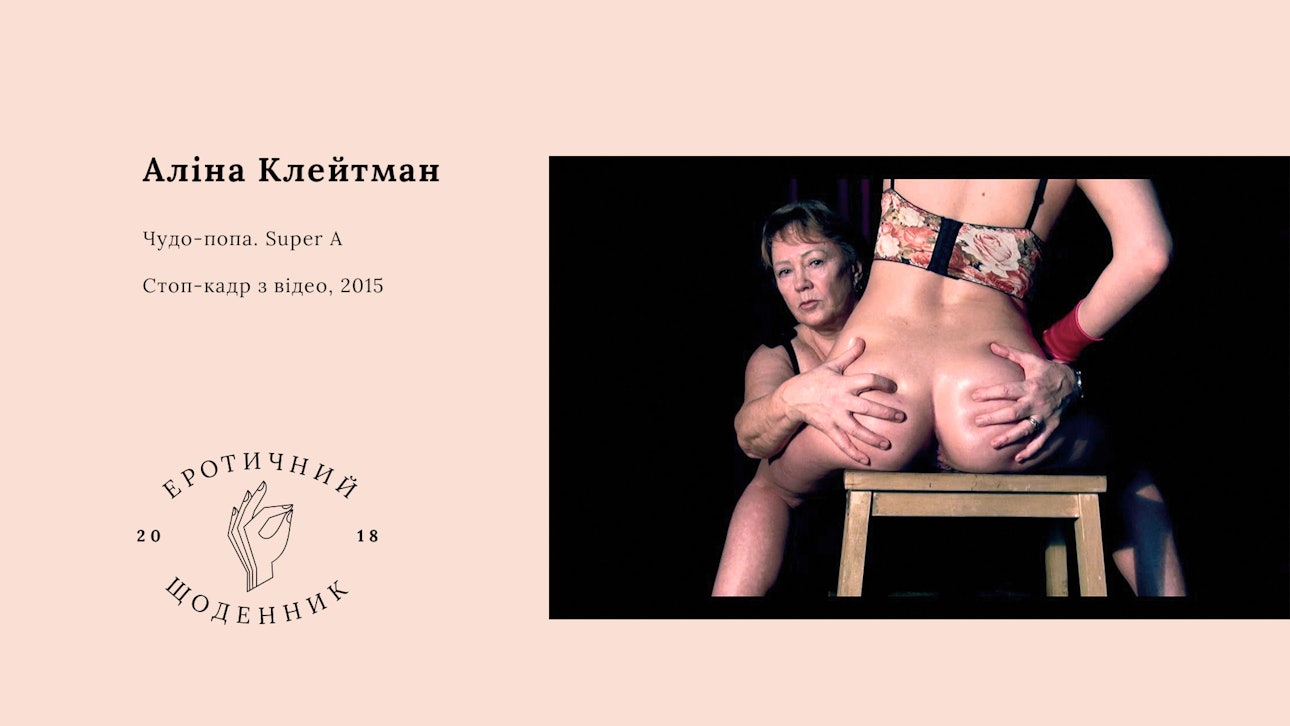
“The idea to create the ‘Erotic Diary’ came a year ago. Do you remember the heated discussions around the publication ‘Ukrainian Erotic Photography’ (the controversy arose around the photo by Sasha Kurmaz on the cover — the image was seen as objectifying the female body — Editor’s note)? The level of hate on social networks was off the charts. At that time, I jokingly suggested participating in a small self-published booklet on social media. And surprisingly — quite a few people immediately wrote to me. In a conversation with artist Alina Kleitman, the idea to make a diary appeared,” says the book’s author, designer, and photographer Dana Kosmina.
Many works for the publication were provided by the artists from their earlier practices, some were created specifically for the book. The illustrations are printed in such a way that they can quite well become postcards sent to recipients.
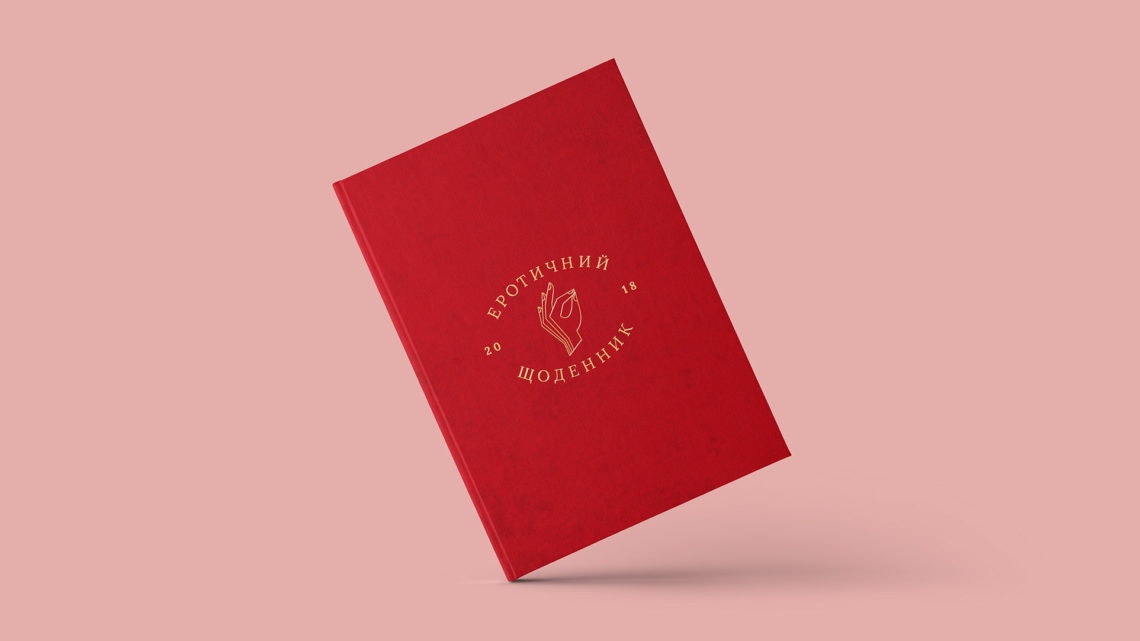
Erotic images arise not only inside the publication; an important component is the visual design: the cover made of red velvet with gold stamping precisely and concisely conveys the sensation of corporeality. This idea is revealed by the designer and author of the book Lera Guevskaya: “Our idea to publish a diary with postcard-works transformed into an art book format. With the blank pages, we invite the owners of our books to write, draw, and actively participate in filling the diary. For these blank pages, we selected uncoated paper with a delicate shade, and for the authors’ texts — various shades of skin tone, because we are all different, as are our stories and experiences. The cover is made of red velvet, and on it — gold embossing: a logo with a female hand inviting into the world of erotic fantasies. However, I joke that velvet and gold are my erotic fantasy as a graphic designer who usually works in a rather restrained style. The diary is feminine in every sense, even the font used for the text is called Lora.”

The “Erotic Diary” is dedicated to the manifestation of eros and thanatos in contemporary Ukrainian society. When thanatos, embodied by war, dominates, corporeality and sexuality become akin to a peacekeeping mission, a voice of nonviolence. The “Diary” is a successor to the published diaries of Gertrude Stein, Virginia Woolf, and other feminist writers who experienced the horrors of war at different times. Although the book by Ukrainian female artists does not directly speak about the war, their visual language cannot be perceived outside of contemporary realities, without memories that any story is still written by men and viewed in the context of heroic and liberating narratives.
However, as Kateryna Myshchenko, literary editor and author of the text, explains, this publication is not a way to talk about or criticize the war, but rather an attempt to shift the militaristic tone and emphasis on universal mobilization prevalent in our society into a peaceful direction. “The book offers to start a dialogue on a different topic and thus reduce the level of violence. Very often, women’s emancipation projects and LGBT voices are, in one way or another, affirmations of another perspective on reality, and in our case — the reality of non-war,” she explains.
“The book offers to start a dialogue on a different topic and thus reduce the level of violence.”
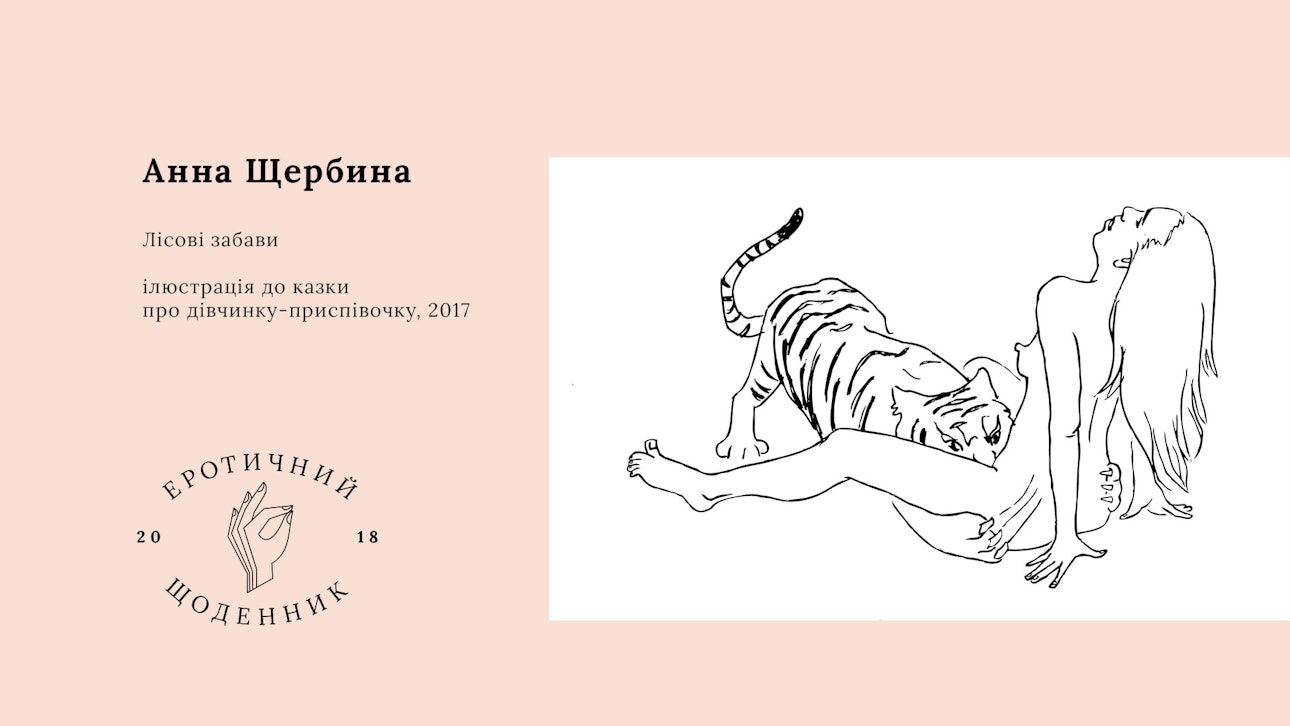
“Most of the erotic products we observe in cinema and literature are an expansion of eros into different spheres, as opposed to focusing on the body as an object. Even today, phrases like ‘conquer’ and ‘subdue’ are common in love lexicon. This characterizes the view of eroticism as a battlefield where someone is constantly fighting for someone else, measuring the quality, value, and beauty of another person. This book presents a different representation of sexuality,” notes curator and artist Oksana Brokhovetska.
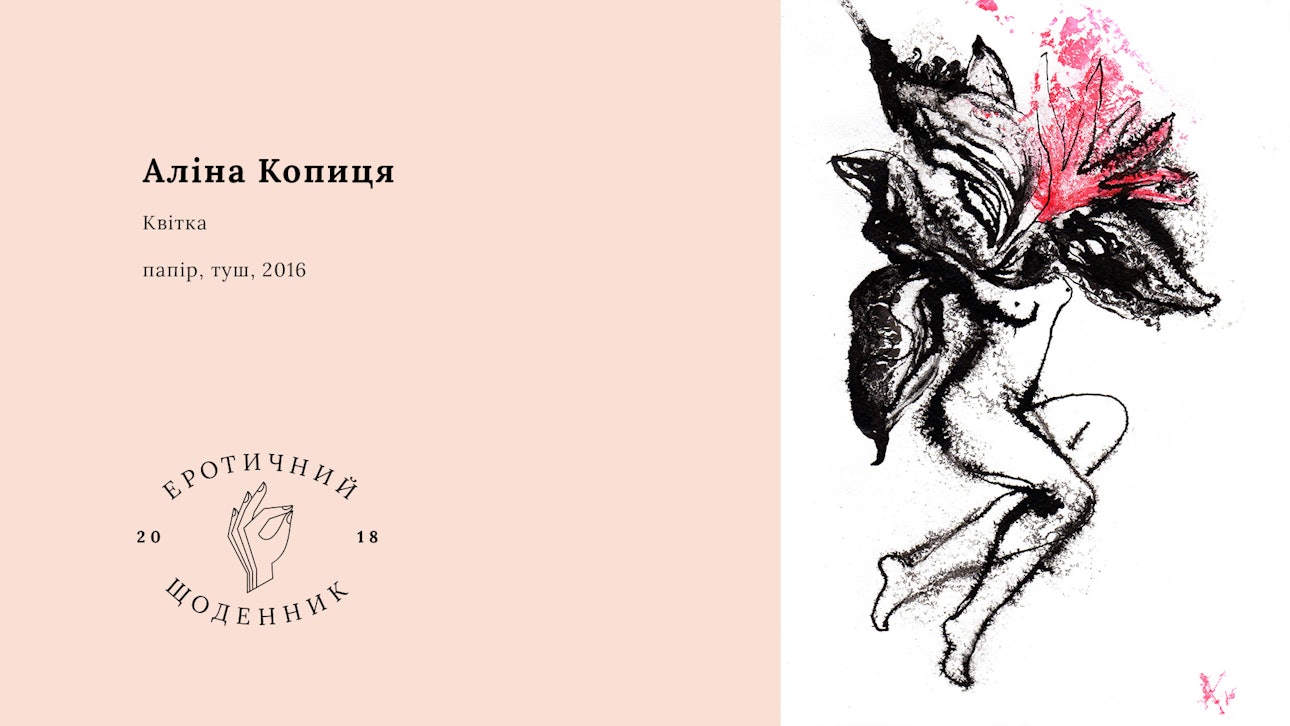
Often, artists turn to the image of nature, which itself, Brokhovetska says, embodies the unity of eros and thanatos. However, one should not think that the images are limited to traditional depictions of flower heads. The flowers in the book “Erotic Diary” are houseplants in Valentina Petrova’s photography, small wildflowers near the “bronze,” almost lifeless body of AntiGonna; shrubs growing at the feet of KotoUtka, or a flower blossoming on the female body in Alina Kopytsa’s graphic work.
The “Erotic Diary” is important in many ways. On the one hand, it is an example of self-organization among female artists; on the other — an analytical approach to their own creativity and that of their colleagues; and third — a reflection on the surrounding world, including the position of a visual publication in the Ukrainian book market. The very possibility of combining the formats of a book, diary, and postcards allows expanding the audience: from those interested in Ukrainian art to those who perceive the book exclusively as a planner.
However, the diary format should not be taken too literally. The work of Ukrainian female artists subtly continues the feminist logic of one of Virginia Woolf’s most famous speeches “A Room of One’s Own” (1928), delivered to British schoolgirls. Woolf explains why no one can recall a single brilliant female writer from Great Britain, yet many name exclusively male authors. For many women writing novels, the space for their creativity was limited to their own room, and their writings had the character of diaries — or were interpreted as such. Therefore, the diary is a format defined by politics and the established societal rules of the game.
For many women writing novels, the space for their creativity was limited to their own room.
One way or another, the opportunity to add their own notes allows starting a dialogue between the diary’s audience and the artists, and for the reader — to become a participant in the project themselves.