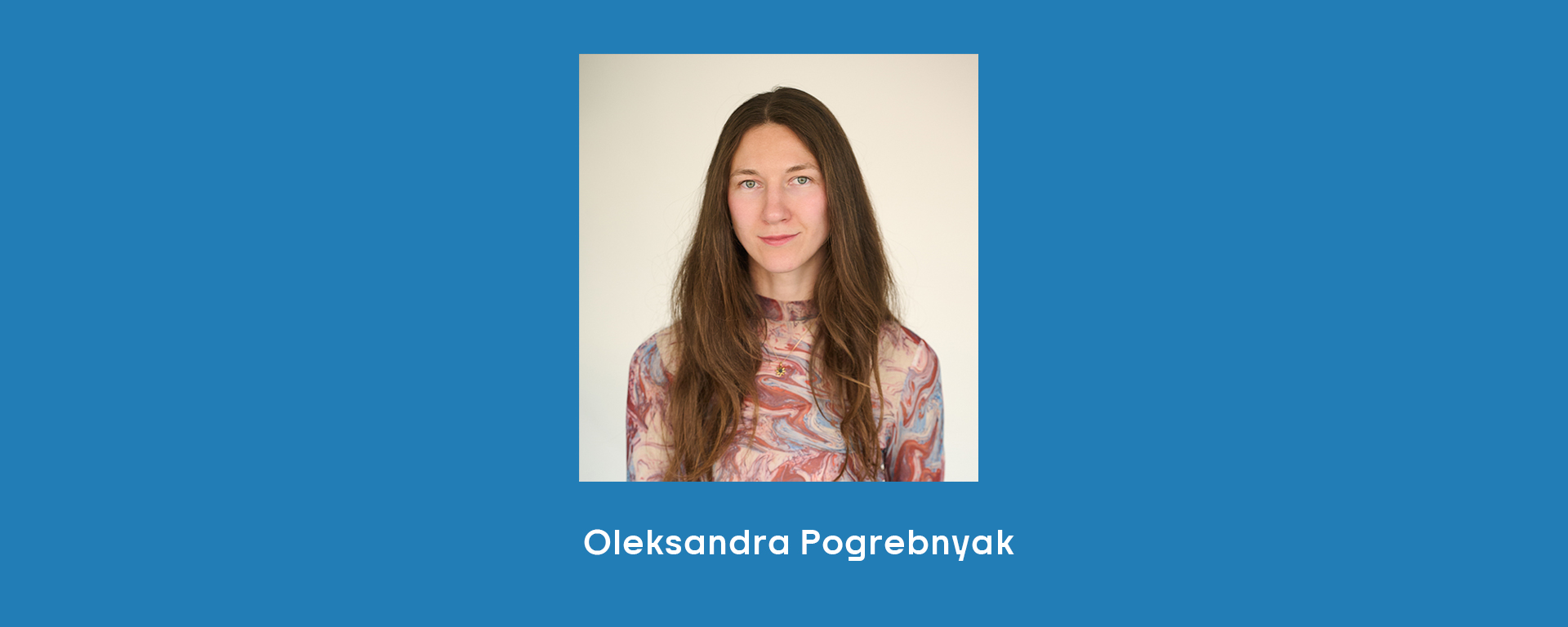
Curator Kuzma’s Horizons
No. 6, March 2003
Having become the first director of the Kyiv Center for Contemporary Art of George Soros in the early 1990s, Marta Kuzma, daughter of Ukrainian emigrants in the USA, practically single-handedly brought Ukrainian contemporary art into the orbit of the global artistic process – as an exceptional phenomenon in its identity, not as a one-time sounding but hermetic. She was much criticized here, but over time it turned out that Kuzma’s professional activity was one of the defining factors in the development of domestic contemporary art. Today, Marta, as the curator of the European biennale of contemporary art “Manifesta,” which will take place in 2004 in San Sebastián, can return to direct work with the Ukrainian art environment.
 From time to time, a special interest in artists from a particular country arises in the world of contemporary art. Which region is currently in the spotlight?
– Indeed, in recent years there has been interest from some curators in representing artists from certain regions previously ignored by the contemporary art world. In particular, from South Korea, Shanghai, and China in general. Most often, this reflects political games rather than increasing interest in art. Usually, politicians invite international curators to work in a certain region and give them the opportunity to curate exhibitions of local artists within large projects or to curate biennales in the respective regions. Examples include the recent work of Bartholomew Marie in Taipei, Hans Ulrich Obrist in Korea, Charles Esche in Gwangju, and so on. Nevertheless, although such interest arises due to objective reasons, culture has become a way to open new global markets. There is nothing wrong with such a strategy as long as we realize the need to avoid projects that serve politicians as tools to achieve marketing goals. I can only cite the example of the former curator of the “Documenta” exhibition and current director of the “Witte de With” Center for Contemporary Art in Rotterdam, Catherine David, who explores complex zones that are not so economically attractive to open friction points, with the desire to show what is often not demonstrated. This is the essence of her research in Palestine, Cairo, Lebanon, Beirut – to present artists who previously had no opportunity to enter the world of contemporary art through gallery doors.
I believe that the notion of considering any place as neutral, unidentified, stems from the desire of contemporary art to be a boundless, international field. Nevertheless, in the context of the increasing uncertainty in the formation of Europe and in the face of international conflict, such a strategy quickly becomes outdated and reflects naive passivity.
Can Ukrainian art attract similar interest in the foreseeable future?
– I have always felt that the creativity of Ukrainian contemporary artists is based on a unique and original approach, without calculating possible income from gallery sales or support from funds. In this case, creativity always seemed effortless, but the result was always exhaustive and convincing. Unfortunately, curators are strange and unsafe creatures whose numbers keep growing, fueled by public recognition. It is necessary to instill in all curators, institutions, and galleries that research in this area is essential for their professional survival, and this includes a strategy different from the justification and quality of their work. Ukraine should start inviting international curators in large numbers so that through their work and experience they encourage others to curate exhibitions of Ukrainian artists. After all, there are too few brave individuals left worldwide, brave curators ready to enter new territories without a suitable system. The international art world has become weak, and perhaps we need to realize this to formulate strategies for further development.
Can you compare the current situation in Ukrainian contemporary art with the situation during your leadership of the Kyiv Center for Contemporary Art founded by George Soros?
– I cannot answer this question informatively enough since I have not lived in Kyiv for the last three years. Nevertheless, I keep my finger on the pulse of the situation even from afar and cannot say that the characters of the local art scene have seriously changed. It seems to me, although I may be wrong, that the collective spirit concentrated around the CCA founded by Soros has disappeared, and everyone is engaged in their own projects. There was never a striving for individualism in Kyiv, and there is something strange about the practice of isolated work on separate projects. I do not think this is only due to insufficient support. It reflects a lack of trust in the art community as a whole.
Has the situation in Ukrainian society changed during this time?
– I am not a sociologist and, again, cannot answer this question without the experience of daily life in Ukraine at present. But I can say that if society has not changed, then it has mummified, and I cannot imagine a mummified Ukrainian society. Judging by international news, Ukraine is a country that delivers endless surprises, some quite amusing. Nevertheless, general suspicion towards contemporary art remains.
Will your membership in the supervisory board of the CCA at NaUKMA affect its future fate? How do you see it?
– I get nervous when asked to talk about fate. I am not a clairvoyant and have never trusted such mystical approaches. I can say that I was recently offered to become a member of the supervisory board of the Kyiv CCA, and I still need to understand what this unexpected offer can bring in terms of providing some real information concerning the institution’s project program. I am somewhat puzzled about how my views can be accepted now if they were ignored a few years ago. Perhaps this is the Nelson Mandela phenomenon. Attitudes change, I suppose. I can only express hope that the CCA will again become a center of artistic activity and an institution of laboratory-scale research. I understand the discussion around the budget and the lack of funding, but I instinctively believe that projects can be realized with little funding if the creative impulse is strong enough. I believe trust should return to artists and cultural producers who have the opportunity to inject new forces and create a discursive environment. Artists, not curators, influence the younger generation, and now is indeed the time for official and academic structures to bring their educational programs in line with the times. Until the education process in Ukraine changes, until those artists who were considered marginalized in the past become teachers, mentors, the formation of a new generation of artists will be very slow.
What is your view on the work of Kyiv art galleries? How does their activity differ from that of their European colleagues?
– European institutions, often supported by ministries of culture, seem more self-confident and operate on a more expansive level. Ukraine is lucky in that some groups survive on foreign money, but in reality, it is the government’s duty to respond to modernity. I hoped that over more than a decade of independent Ukraine’s existence, we would see the emergence of new spaces with new models of artistic practice and new cultural agencies that would respond to the cultural demands of the country’s young generation. This does not include expenses for maintaining large museums or galleries – smaller-scale initiatives that would create a polyphony of artistic activity, multidisciplinarity throughout the field.
Why has the list of more or less known and successful artists in Ukraine not changed for many years?
– As I said, a mechanism is needed whereby these artists could become teachers, collective initiators of ideas, mentors. This is necessary to properly form the vision of contemporary Ukrainian art. This is a goal I commit to achieving, living both in Ukraine and abroad. Despite significant resistance from today’s way of presenting contemporary Ukrainian art.
What needs to be done for contemporary art in Ukraine to be recognized as an elite cultural value? On whom does this depend?
– The word “elite” worries me a lot. In fact, I do not believe in elite cultural values. Ukraine is not in a market situation developed by collectors wishing to own elite and precious works. Unfortunately, there is still misunderstanding and disrespect by some institutions of what is not alien but, on the contrary, useful for understanding Ukraine’s contemporary cultural identity. Instead, Ukrainian artists continuously represent Russia at international biennales, as was the case at the recent São Paulo biennale and will be at the upcoming Venice biennale.
What do you consider your greatest achievement during your work in Ukraine?
– That I managed to survive.
What has brought you the greatest inspiration after finishing your term in Kyiv, and what has been the greatest disappointment?
– I was very inspired by how much the audience for contemporary art has grown since I arrived in Kyiv in 1991 when contemporary art was an exclusively hermetic environment. I remember the excitement I felt seeing the number of visitors to the “Day of Life” exhibition at the CCA at NaUKMA. The greatest disappointment was related to the bureaucratization of contemporary art. It was too early to castrate a movement that was moving forward so rapidly. It was reckless, careless.
Can you tell us about the topic of your dissertation defended in London?
– I have always been interested in the functioning of cities and how it contributes to the development of the artistic process by providing the artist with the role of an urban provocateur or intervener in facilitating dialogue between the city and the art space. I wanted to return to the history of modernist architecture, its development within the European tradition, to assess how the discussion around architecture led to a reevaluation by artists of traditional methods of artistic practice. This resulted in a wave of French situationists, Eastern European performers, which was caused by the crisis of the urban environment, not a crisis in art. This topic will be central to the exhibition concept I will curate in New York, as well as a special issue of the “TRANS” magazine I am working on with artist Dan Gray.
I think there is a tendency to ignore the city’s function in relation to artistic practice, and I feel this is happening in Ukraine as well. We have much to learn from architecture regarding artists’ creative methods.
When will the work on “Manifesta 5” move from the concept development stage to direct organization?
– In fact, Massimiliano Gioni and I have already completed the first stage of developing the next “Manifesta” project in San Sebastián, which we presented in mid-February in Madrid within ARCO (a major international contemporary art fair – ed.). We do not seek to stop the development of the concept but want it to happen organically. Our task is difficult and, at the same time, privileged. We work on the project in the context of political complications, during a possible world war. This leads us to issues of violence. But not violence in the literal sense, but violence in the philosophical sense, which, since Baudelaire, is compared to experiment, breakthrough, innovation. In this sense, we turn to the notion of the violence of imagination, if we consider imagination as resistance.
Do you already have certain thoughts about inviting specific artists to the biennale?
– Not yet, it is too early to name any names. We do not proceed from the desire to attract certain artists, but our research of artists and their work helps us shape the project, and this may be reflected in its organic development. However, the nature of the project will be retrospective and will involve a combination of factography and documentation.
This year marks the 50th Venice Biennale. Ukraine’s participation experience in the last one in 2001 led to scandal, division, and a protracted positional war within the Ukrainian contemporary art community. In your opinion, why did this happen, and what should be the technology of Ukrainian representation at the Venice Biennale?
– No one in the international art community is interested in internal, so to speak, family conflicts. As a result, the conflict became so hermetic that the Ukrainian project at the last Venice Biennale turned out to be insignificant and even ignored. No one wants to be involved in family quarrels, especially now when the stakes and risks of global politics are too high.
I hope Ukraine will be able to resolve its own issues domestically and enter the international level consistently and maturely, rather than represent someone with connections to significant political forces within the country. This should be approached somewhat more objectively, as in other countries – through a commission openly reviewing submitted projects. This might say more about the transparency of contemporary culture today rather than reflect how political figures would like to see it. Audiences worldwide are far from intellectual and see everything through veils and interpretations. This must be understood. I can add that Spain this year chose artist Santiago Sierra for its national presentation in Venice, whose works are considered almost criminal, if not explosive. Personally, I disagree with the directives of Spain’s ruling party, but this is an example of even a conservative government recognizing the need to work with more liberal artists to gain recognition from the new generation.
Will the Venice Biennale 2003 influence the concept of the future “Manifesta”?
– I have no clear idea regarding Francesco Bonami’s concept, which includes inviting many curators to work on satellite projects for the main biennale project. Venice and “Manifesta” are two very different models. The future “Manifesta” is the result of my collaboration with Massimiliano Gioni. I think the only influence might be the fact that Gioni is Italian, and this might somehow be felt.
Do artists become merely tools for visualizing the curator’s ideas when working on such a well-thought-out project as “Manifesta”?
– Every curator has their own approach. I have always felt myself more as a collaborator, a participant in the creative process when working with an artist. In this case, it is important to feel closeness to the process but not to interfere radically in theoretical concepts. In the end, we must trust our instincts regarding the justification, strength of the work, and the artist. Moreover, our idea is open enough for various projects to be woven into its fabric, not to be suppressed. Thus, the concept of “Manifesta 5” may remain open until the very end.
Can you name Ukrainian artists who might participate in “Manifesta 5”?
– No. Are you out of your mind? I would not want to commit suicide so early.Link