
Transformative longing
This text was written by participants of the third cohort of the PinchukArtCentre Curatorial Platform upon completion of the educational program, which lasted from October 2019 to March 2020
DISCLAIMER
The opinions expressed in this text are evaluative judgments and are not intended to incite hatred, hostility, or any degradation of the dignity of a person or group of persons based on gender, race, nationality, language, origin, religion, disability, or affiliation with any artistic movement or direction.
The text is the result of five months of discussion and living through the situation in Ukrainian art and carries the imprint of each of the authors. Valeria Karpan, Anton Usanov, and Nastya Khlyestova expressed their viewpoints on the topic in ways accessible to them. Thus, the text is not a single canvas but a dialogue between three authors.
We invite the reader to join this dialogue.
ARE YOU A POSER OR A DECADENT?
Contemporary Ukrainian art, emerging from a culture nurtured by inspired contemplation of the ruins of places and situations, is determined by the desire to share its longing. Therefore, the gaze of Ukrainian artists working with socially critical themes is simultaneously directed at the hypnotic spectacle of processes of decay. However, such a state of freezing before destruction is not identical to the decline of modernity. Perhaps it even concerns creating conditions for an existence that would correspond to a moral imperative and global humanistic values.

In crisis situations, when the traditional symbolic order declines, art is perceived as an ethical effort rather than a practice of creating new meanings. This effort is aimed at proclaiming radical protest against the dominant social reality through politicized socially critical expression. Thus, protest goes beyond everyday life, transforming into artistic gestures and objects. Is art, for which aesthetic distancing is a condition of existence, appropriate under such circumstances? Can such art preserve revolutionary potential?
Today, artists are interested in personal and collective memories, modernist projects, the consequences of colonialism and totalitarianism. Upon close examination of ruins, one can even notice their transition into dynamic matter. These processes are activated by nostalgia, memories of encounters with catastrophes of the recent past, which infect the present and future. However, in the case of “ruinous” art, it turns out that it declares high value of ethical tasks, working with trauma and memory, and at the same time freezes in contemplation of destructions. After all, the aesthetic distance produced by the practice of contemplating catastrophes implies a suspension of interaction between the production of art forms and influence on the audience.
The presence of contemporary ruins (buildings, amusement parks, and entire cities) accessible to our living bodies manifests the presence of extinction entering our reality. Experiencing longing for the future amid the ruins of the present is a marvelous form of time travel. As if wandering museum rooms, we get the opportunity to contemplate the consequences of the catastrophic present, to touch them. Documenting and interacting with ruins through art seems to give the chance to grasp the image of one’s own death while still alive.
The fate of the Ukrainian melancholic aesthetic gaze unfolds against the backdrop of ruins, in a state of directed, transformative longing (longing). Such “transformative longing” creates conditions for dissensus, that is, an aesthetic rupture, a distinction discussed by Jacques Rancière [1]. It is this rupture that allows the establishment of a special form of disconnection from dominant power relations, revealing the prevailing symbolic order. This fracture arises in the space between the relationships of the artwork (based on artistic skill) and social tasks, making audible the language of those whose voices sounded as a cacophonous layering of sounds.
ENTROPY
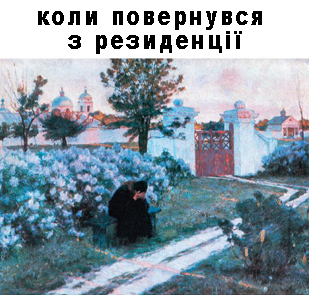
European culture is often fueled by a melancholic mindset that has nourished it for many centuries. Such sensibility is also noticed in Ukrainian literature and art, where a certain residual unchanging gene is present — “longing,” sadness. It passes from era to era, sometimes hiding between main words and slipping in uninvited and even unlawfully, sometimes emerging as a ruler, conquering all around.
To go beyond chaos and entropy, we propose turning away from the optics of the ordering subject of the Western European Enlightenment type. Let us assume that this state of transformative longing itself is a special form of existence. After all, ruins and decay are not isolated from the intense, everyday, vital — they are part of the environment and ecology. They define the landscape and can influence the processes of forming new life forms. Similarly, the melancholic gaze directed at the endless road unfolding across the Ukrainian steppe is an active element of matter that fragments its parts and recombines them.
Walter Benjamin (in “Über den Begriff der Geschichte“) described damaged structures as something deeper, saturated with signs and information, compared to which whole forms appear as flat images. The patterns of cracks in ruins are symbols of violence that become relevant when theorizing about violence in contemporary theory and art history. That is, the entire art historical historiography is permeated by destructive violence, so researchers feel considerable satisfaction when gaining access to the destructive wrinkles of artistic artifacts. Studying the signs of melancholic art means being a decadent researcher.
HISTORICAL CONTEXT AND THE UKRAINIAN MELANCHOLIC LANDSCAPE
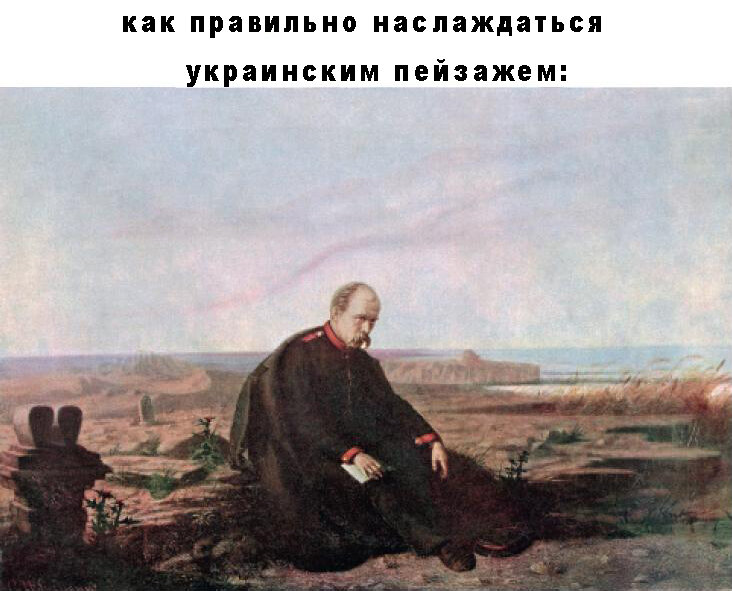
To consider Ukrainian art as a conditionally coherent history that moves perhaps not toward any obvious goal but acquires specific features visible only post factum, after time and space. To stitch the fragmented elements of the past with another thread of similarities and differences. Always present in Ukrainian culture, “longing” sometimes hides at the bottom, sometimes breaks out and asserts itself in artistic movements striving for decadent intoxication with decline, devastation, ruin, negation, etc.
The development of the aesthetics of ruins in Ukraine from the early modern era to the present is accompanied by the phenomenon of “longing,” whose visual representation is outlined by works of artists with refined decadent moods. Both concepts are universal and close to negative aesthetic value — the “low,” that is, tending toward disappearance and displacement. However, the low and destructive, as Jacques Derrida believes, is a positive phenomenon, because when an object turns into ruins, it demonstrates its internal contradictions to viewers. The presence of destructive, negative cultural forms contributes to the structuring of society, overcoming chaos, and establishing a new order.
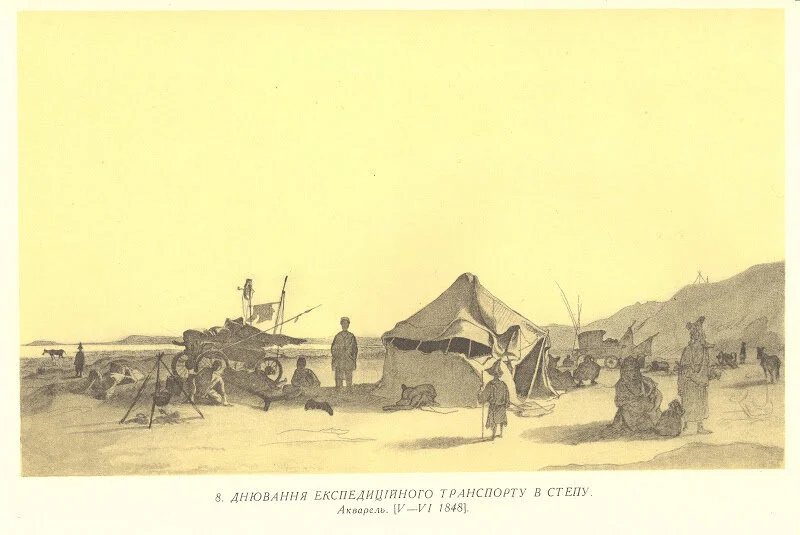
Taras Shevchenko “Daytime of the expedition transport in the steppe” (1848)
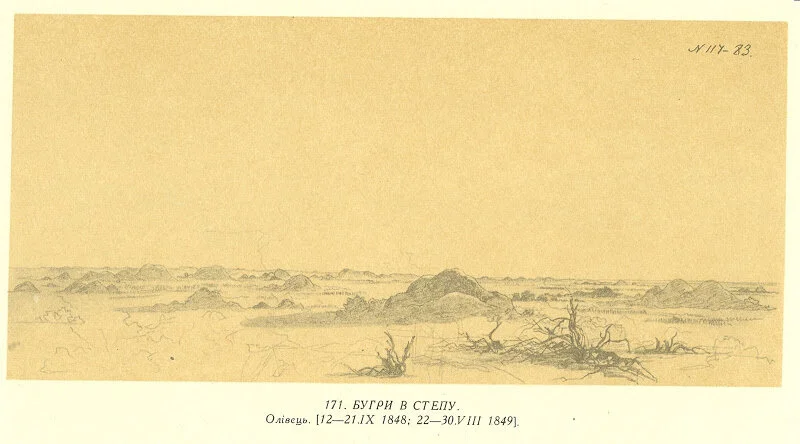
Taras Shevchenko “Hills in the steppe” (1848)
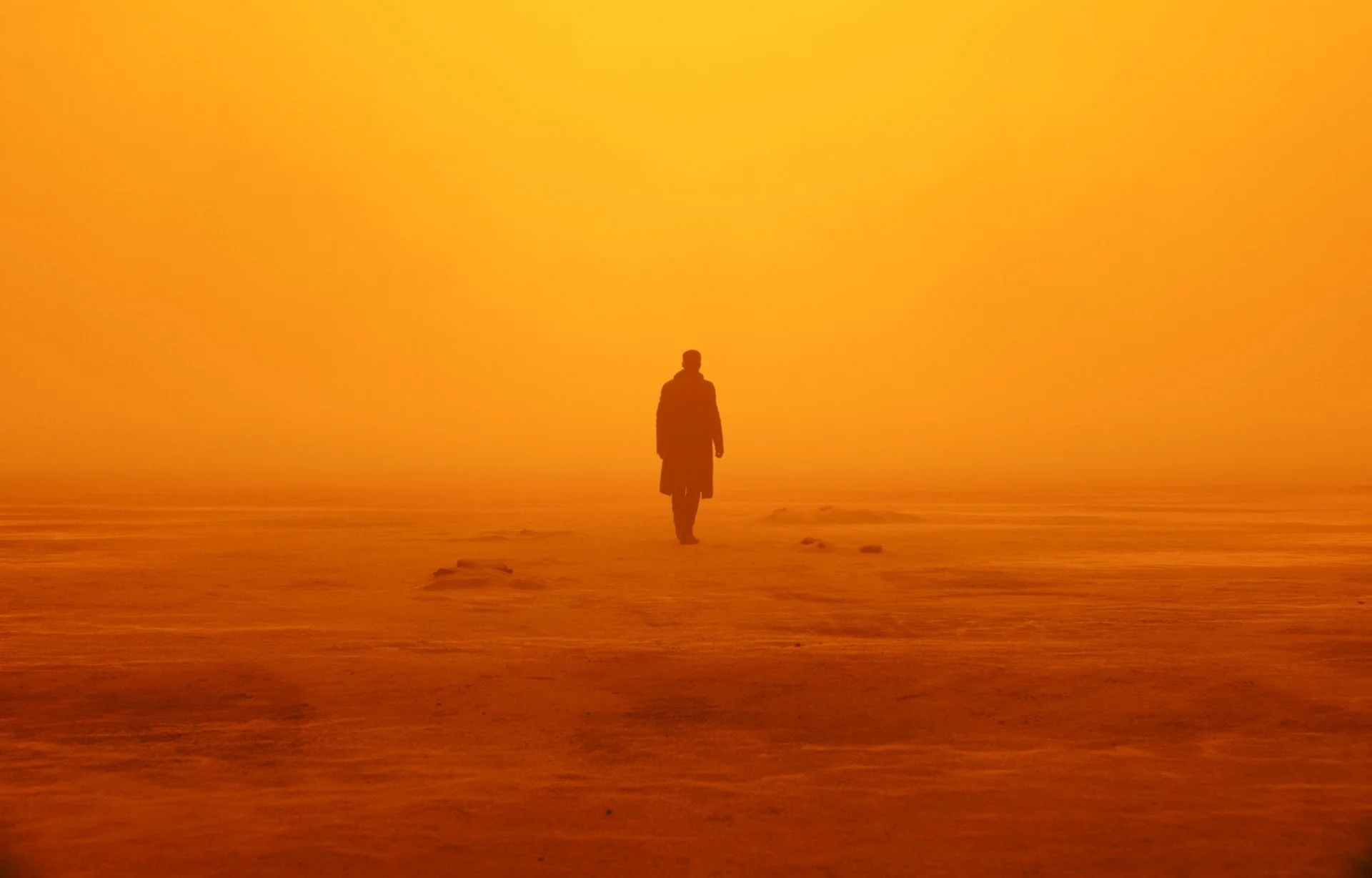
Frame from the film “Blade Runner” (2017)
To denote the Ukrainian historical context of these phenomena, we referred to examples of depicting ruins, roads, and longing in painting, literature, and musical works. The Ukrainian landscape is a path through the steppe, which for centuries has been traversed by various geopolitical superstructures moving through Ukraine to European capital cities. The unstable history accompanying the undulating Ukrainian horizon resembles a liquid spreading across the breadth of the Dnipro. The wavering lines disrupt the usual European order of constructing optical paradigms, the most important of which is the so-called linear perspective. Using the horizon to determine one’s own place and relation to the surroundings is a reliable tool for calculating the position of sailors and artists. It provides a sense of orientation, thus enabling colonialism and the spread of the capitalist global market.
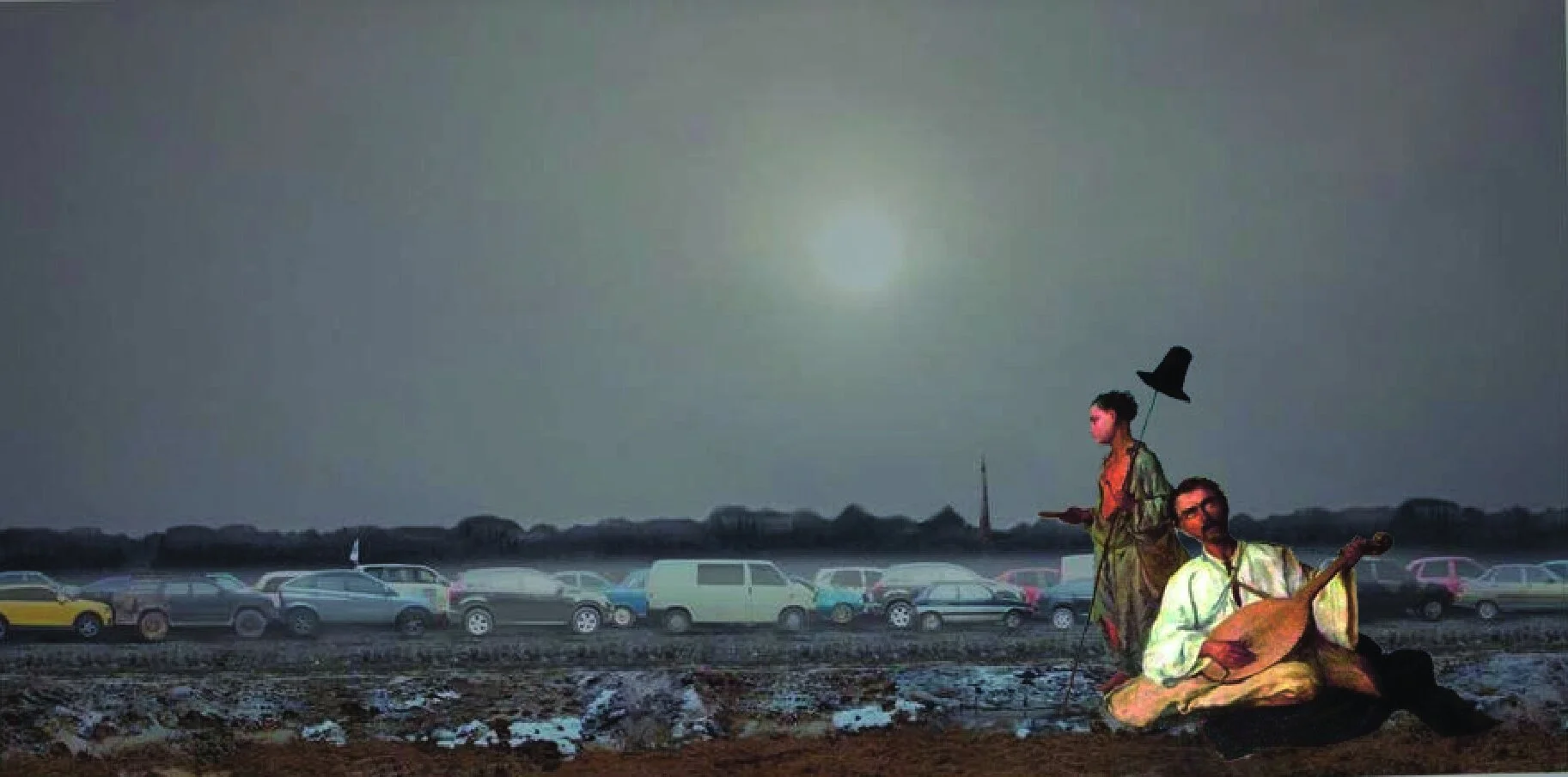
The formation of the tradition of the Ukrainian melancholic gaze at ruins was influenced by the European pictorial tradition, for which the period of fascination with ruins falls on the 18th century. Artists traveled in search of ruins and picturesque landscapes, creating works that would activate “longing.” Motifs of enchantment with processes of decay and ruins are found in the works of Hryhoriy Narbut, Taras Shevchenko, many Peredvizhniki, and Lesya Ukrainka’s works. However, the folds of the saints’ chitons in Pinzel’s works represent religious glorification of refined melancholy. In sculptures of the crucified Christ, as well as many suffering Christian figures of various saints and martyrs, Pinzel resorts to naturalistic depictions of acute physical and mental suffering of exhausted bodies (often in fainting states). Similarly, Gogol’s abandoned landscapes romanticize processes of destruction. The stories contain lyrical digressions filled with images of decay and steppes, where the image of graves embodies the longing of modernity, activated by the world’s variability.
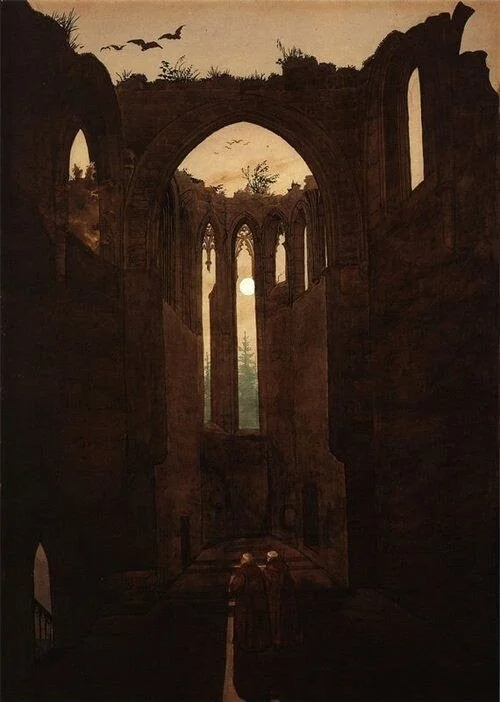
To better understand the origins and character of the visual representation of ruins, we propose referring to the German word “ruinenlust,” which denotes a special “sensibility to ruins,” a mixture of fascination and romantic gloom as a transhistorical emotional reaction to ruins. For example, heightened sensitivity to contemplating ruins is characteristic of the gaze of archaeologists during the great archaeological explorations of the 19th century. These were times of mass admiration for the results of excavations of Pompeii, ancient Troy, and treasures of Hellenistic culture.
Other origins, but the same character, have the sensibility to ruins characteristic of witnesses of World War II. In 1953, novelist and critic Rose Macaulay wrote that these “new ruins” can never achieve the aesthetic distance of classical or medieval remains. But even in the midst of conflict, many artists returned to the theme of decay to find ways to reconcile with modern war. The “ruinenlust” gaze is present in the pictorial tradition of the Ukrainian landscape. The melancholic landscape presents remnants of totalitarian eras and repressive regimes, as well as contemporary wars and conflicts in the east. In the contemporary Ukrainian melancholic landscape, the viewer can find artifacts of catastrophes linked to specific times and places but indicating what (and who) remains hidden and invisible.
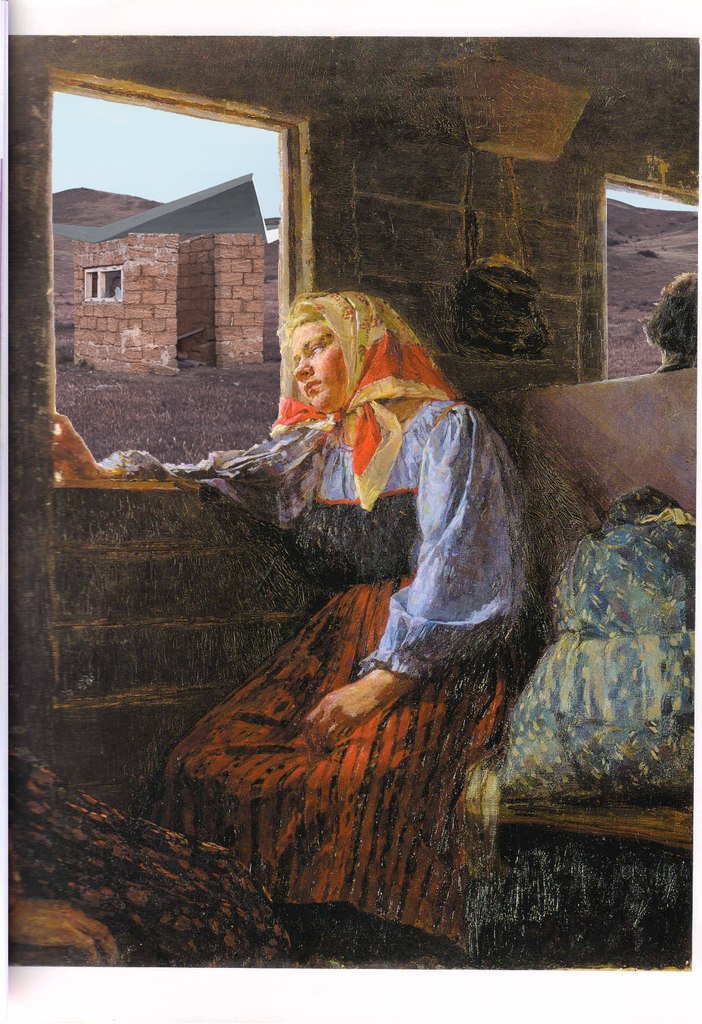
CONTEMPORARY LONGING AS A STYLE OF EXISTENCE
In immortalizing ruins, Ukrainian art again turns to its melancholic moods, which sometimes surface and manifest themselves with full force, sometimes are forced to hide under the guise of something else. Today, melancholy should not hide under the guise of painting ruins, criticism of the socio-economic order, or anything else, but should become explicit. Or rather, it should be depicted through anything, readable and visible. Revolutionary potential is replaced by melancholy. Revolutions end and await new historical moments of surge, while melancholy is eternal and always present with us. It is precisely the uncovering of its potential that can lead to new art.
A special feature of longing in post-Soviet countries is the dream of an ideal world that existed in the West. Thirst for normality is embodied in fantasies about the European past, whose distanced contemplation of ruins evokes a sense of temporary displacement and is a source of anxious fascination. However, the “destructive” gaze can be interiorized, revised, or redefined through the experience of shared experiences. Boris Mikhailov creates series of black-and-white photographs (“Salt Lakes,” “Near the Ground”) — often blurred, partially damaged. The analog technologies of making these photos seem part of a Soviet ritual, and the images themselves resemble retrospections of various experiences of shared existence. The artist depicts a state of general (shared) “viscosity,” through which everyone finds their belonging to a shared ruined time.
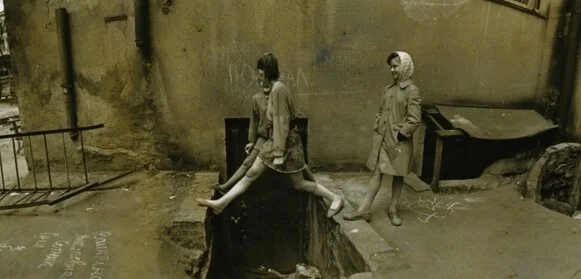
Boris Mikhailov, “Near the Ground,” 1982
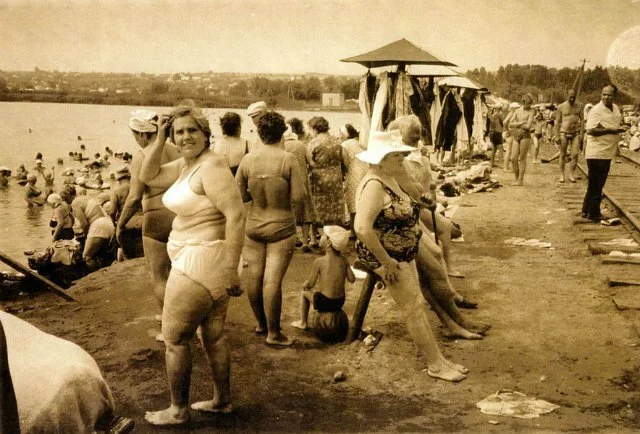
Boris Mikhailov “Salt Lake,” 1986
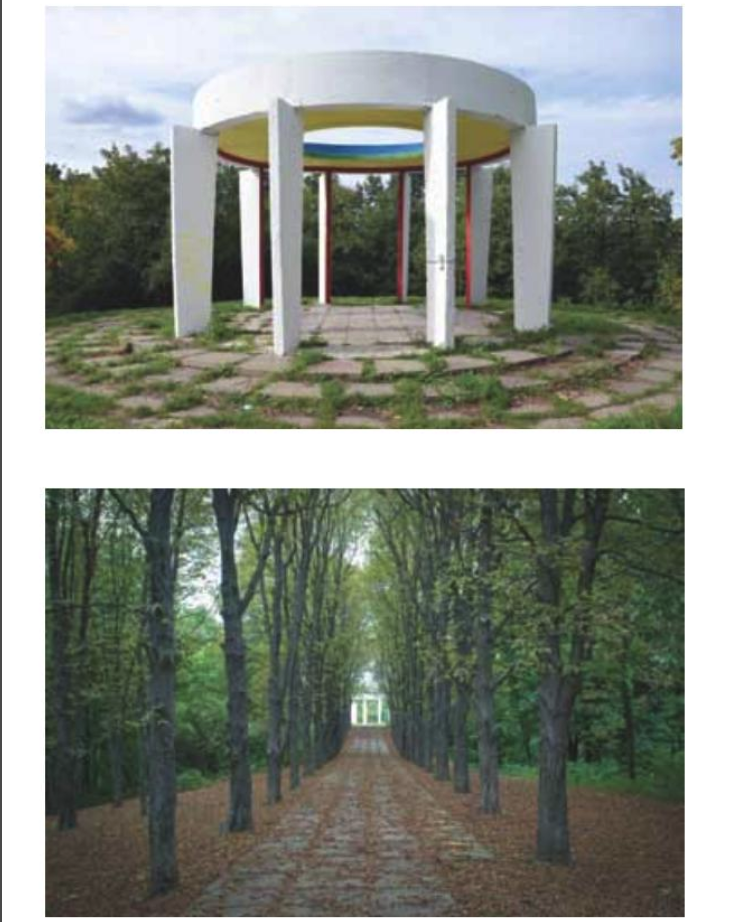
“Group of Objects,” documentation of the “Kyivproject” project (2013)
The destruction of modernist architectural dreams is presented in the research project of Soviet modernism “Kyivproject” (2013) by the “Group of Objects” (Oleksandr Burlaka, Ivan Melnychuk, Vlad Goldakovskyi). Such works show ruins as far from a gaze indifferent to social relations. They emphasize their emptiness for the sake of aesthetic experience.
Olena Subach in her photo series “Armageddon — Meteorite Berdychiv Approaches” (2017) reinterprets a future that could have happened if a meteorite named after the hometown of an astronomer from Berdychiv caused a global catastrophe. About the hopes of people in small towns of Ukraine, constant waiting: for a miracle, arrival, falling stars, and meteorites.
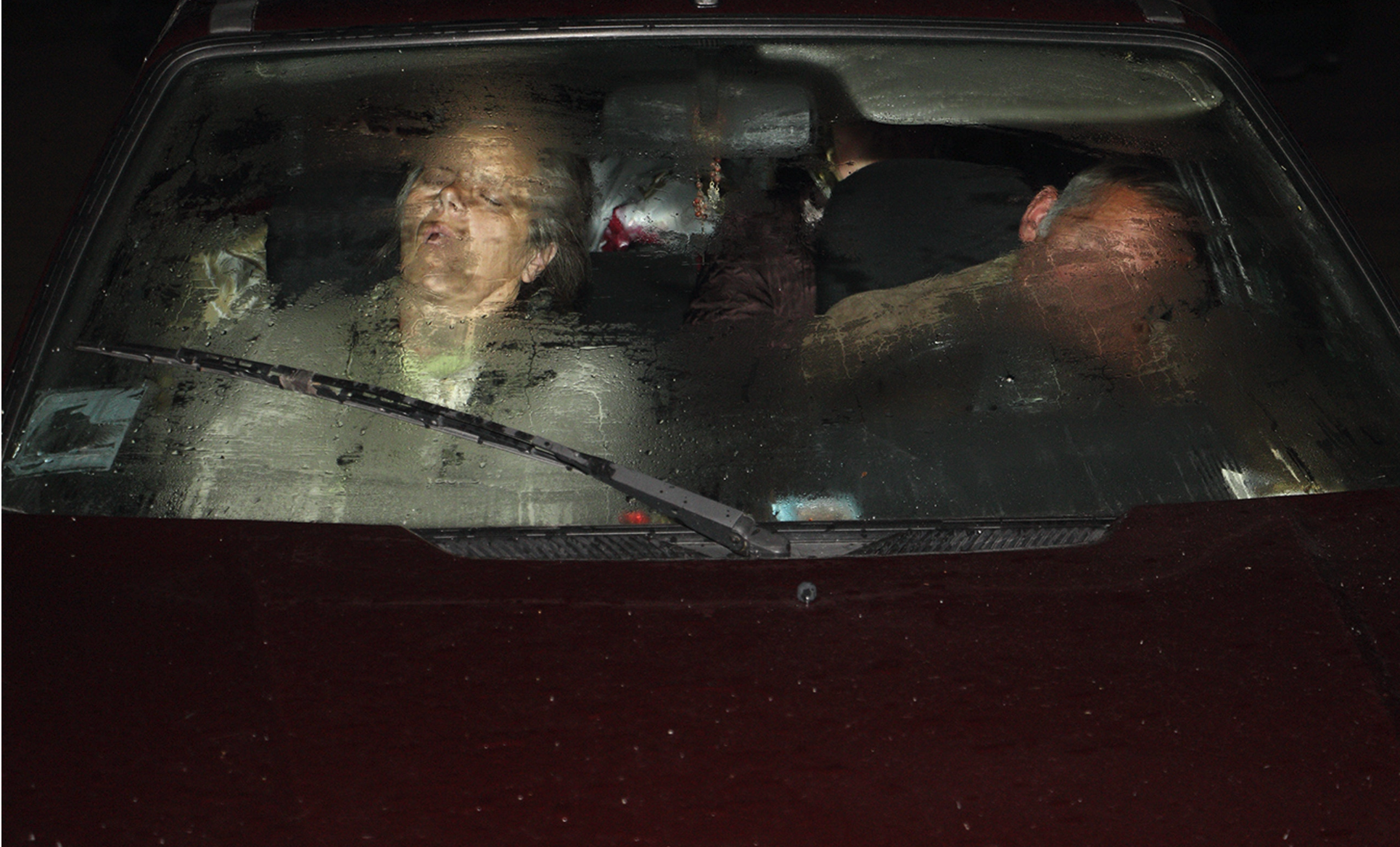
Olena Subach “Armageddon — Meteorite Berdychiv Approaches” (2017)
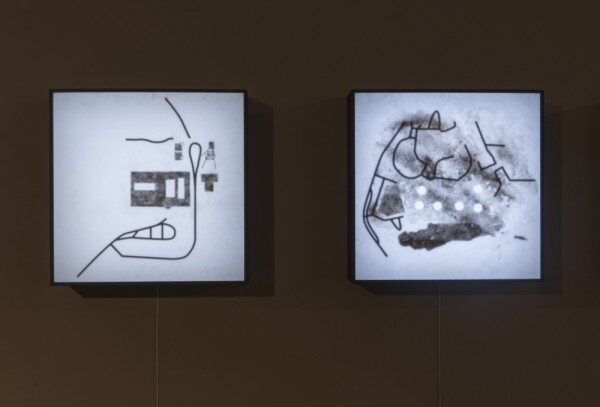
Nikita Kadan, “Plans from Dust” (2014)
Artist Nikita Kadan turns to relic objects that become a portal leading into political history marked by hybrid wars and contradictions. The artist’s gaze, embodied in graphics and installations (“The Possessed Can Testify in Court,” “Plans from Dust,” “Notes to Archives,” “Indivisible”), conveys the feeling of contemplating the ruins of the political and economic modernist project. In Nikita’s works, historical artifacts and documents simultaneously point to ideological conflicts and contradictions, yet within this flow of critical tension unfolds decadent longing. The objects presented in the artist’s graphics and installations remind us of our own finitude. Regardless of how many new objects we produce, consume, and discard, they will outlive us and the goals for which we create them. Although the end of our own history is inevitable, it remains ultimately unimaginable, transitioning to the category of the sublime.
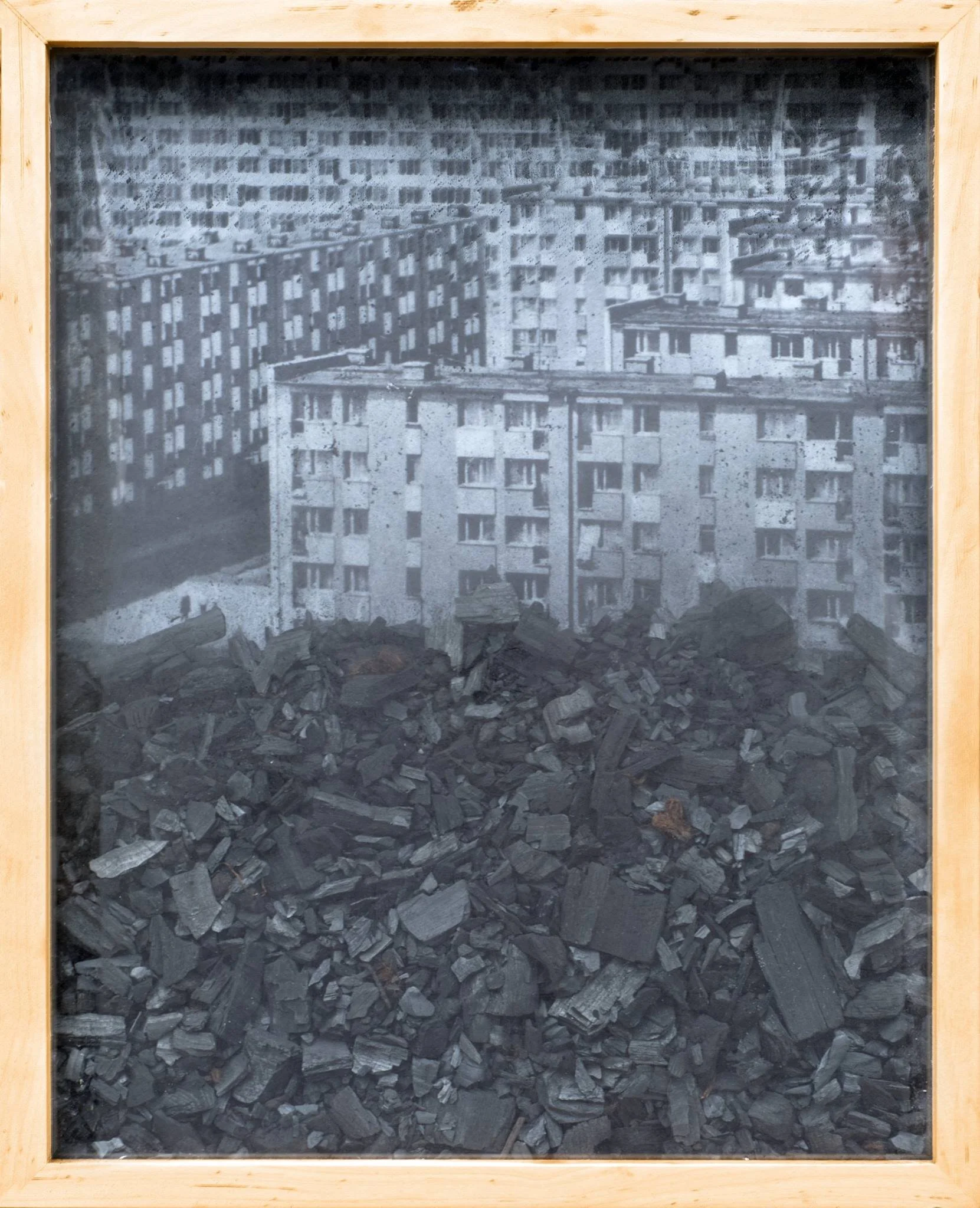
Nikita Kadan, “Notes to Archives” (2015)
Contemporary Ukrainian artists explore places as sensitive zones that respond to economic fluctuations. Artists’ gazes are directed at liminal zones that belong to no one.
Artists Rachynskyi and Revkovskyi turn to the symbolism of entropy. They work with tangled temporal and spatial frames, where time twists into knots and loops, as entropy concerns not only the present but also the future. Avoiding exploitation and trivialization of economic struggle and decay, the artists collect real and imagined archives of destruction of industrial zones between post-Soviet and neoliberal history.
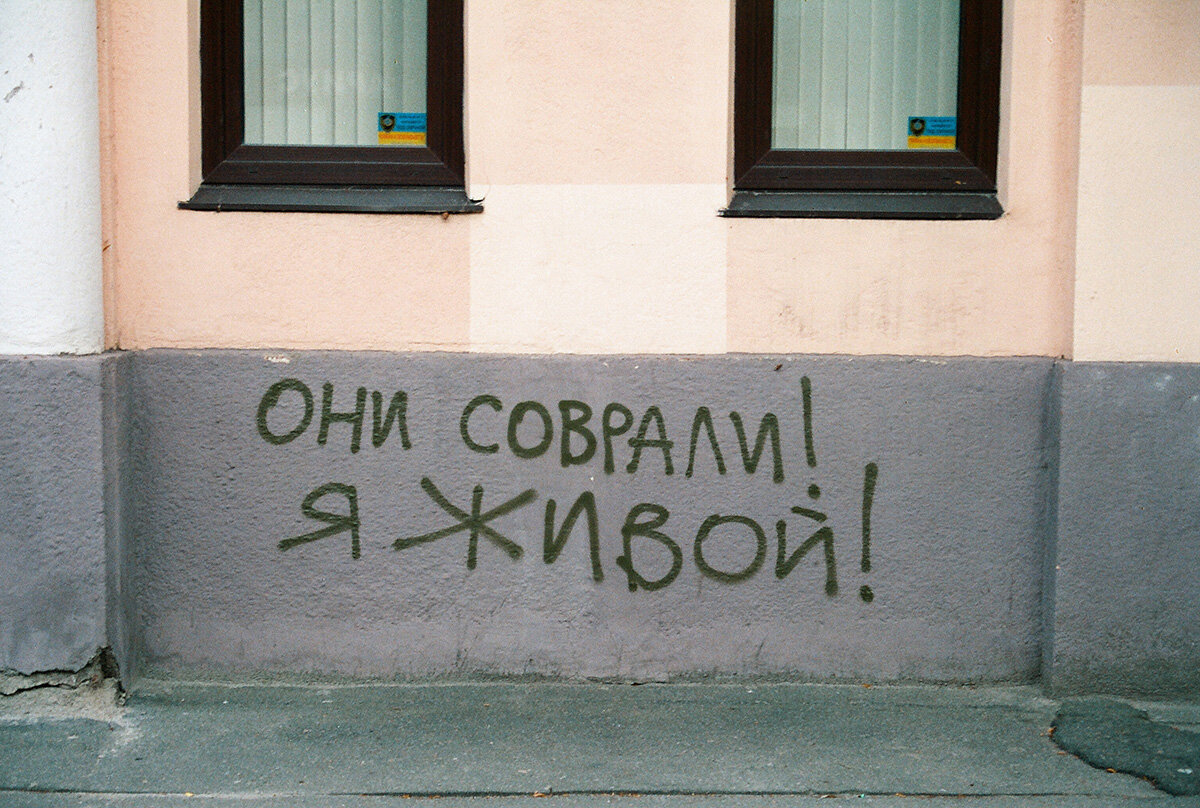
Revkovskyi-Rachynskyi “War of Inscriptions,” series of texts on the streets of Kharkiv, 2016
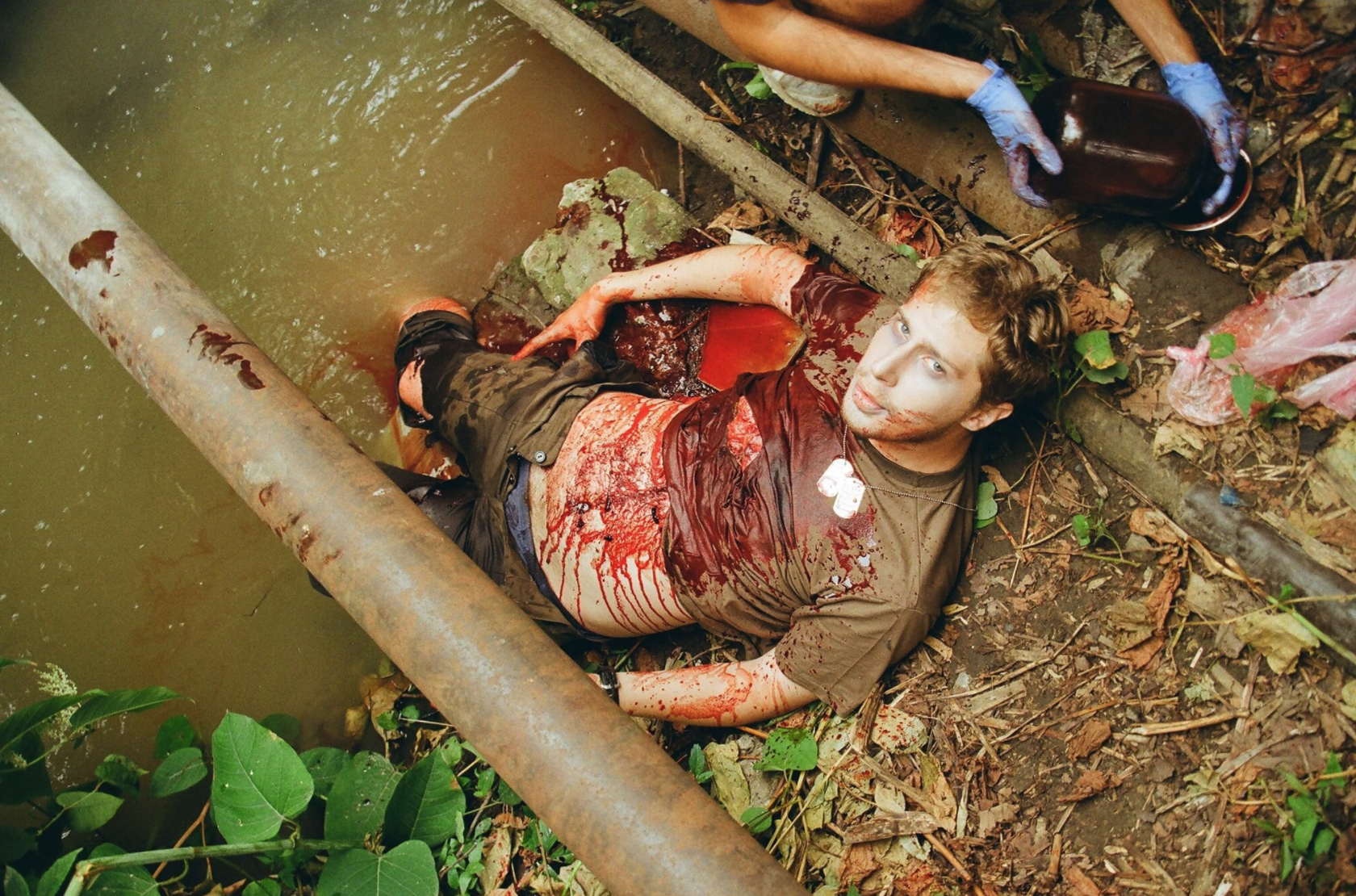
Revkovskyi-Rachynskyi “Darkness” (2019)
Kateryna Buchatska in her work “Record of Pain” plays with time, media, geological formations, and addresses themes connecting archaeology through sculpture. Covered with lava remains of a paleontologist and fossilized dinosaur bones push the viewer to reflect on prehistoric mentality preceding the origins of the Anthropocene back in the Neolithic revolution, that is, eight thousand years ago. This way of thinking opposes anthropocentric discourse, within which the Anthropocene does not confirm its humanism in the conditions of a complex present. Evidence of this failure is the current situation shaped by the pandemic. Anthropocentric optics assumes that the origins of the pandemic come from our relationships with the environment, and hybrid formations resulting from human actions must be harmonized with global processes. When there is economic, social, legal, medical, ecological inequality — it leads to ruinization. Therefore, the idea of collective human extinction amid social and economic changes accompanies anthropocentric discourse. Images of overgrowth by flora and coverage by lava of places of capitalist relations simultaneously push us toward archaic and futuristic ways of thinking. According to these alternative future scenarios, human impact can be neutralized in favor of organic, botanical life that does not belong to human history or culture.
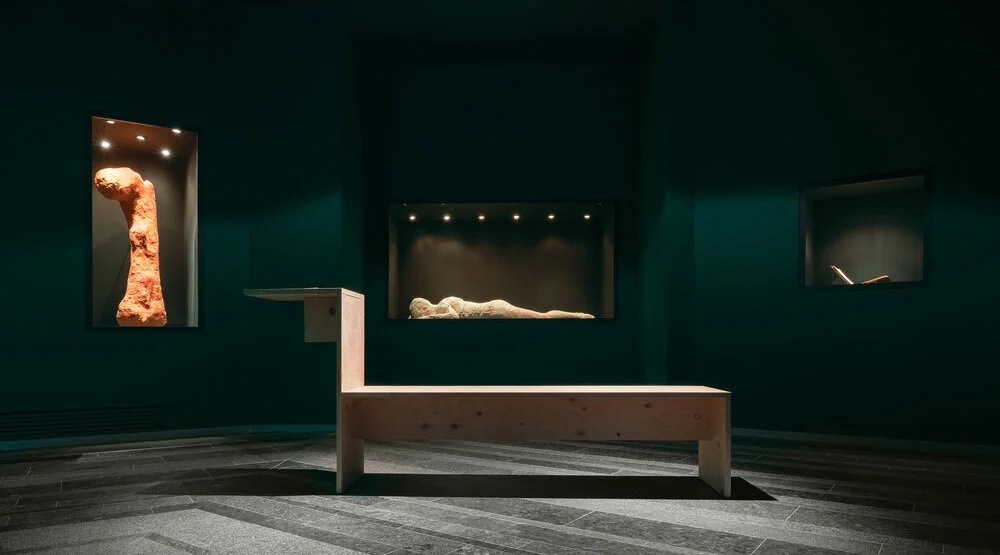
Kateryna Buchatska, “Record of Pain” (2019)
What kind of decadent are you?
a) Lesya Ukrainka
b) Nikita Kadan
c) Taras Shevchenko
d) Cassandra
PLACE-MAKING
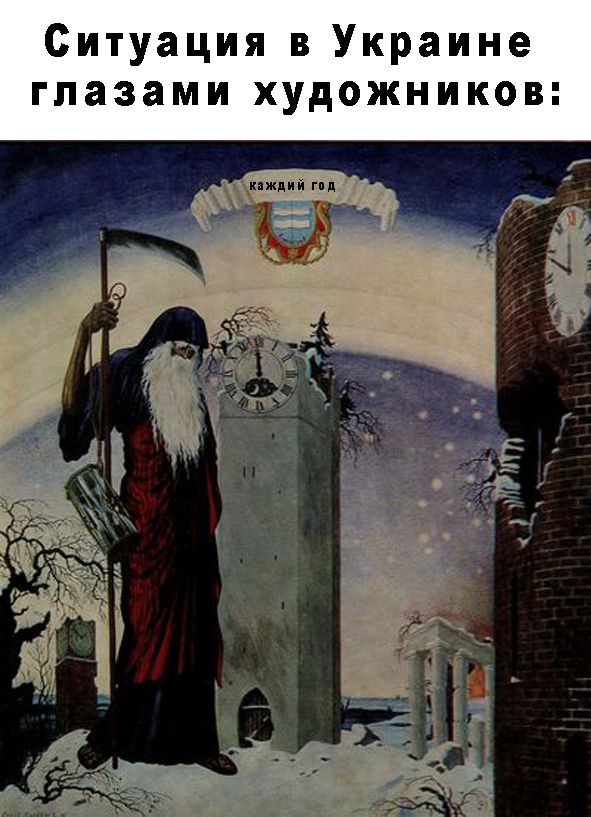
Often contemporary artists explore ruins of industrial objects, peeking behind fences that cover the chaos of urban infrastructure, social inequality, corruption. Artists working in such fields fall into the category of political/social activists. However, the decadent character of such practices, the moment of fascination with ruins, escapes attention.
This discourse of the melancholic gaze gives physical spaces deep meaning, adapting our perception to different experiences, especially in places of trauma and deep shocks. According to the author of the term “traumascapes,” Maria Tumarkin, trauma is not contained in the event itself but in how the event is experienced, as well as how past experiences are felt over time. The intensity of experiences may not weaken across generations, meaning that the gaze at traumatic landscapes is rooted in its special melancholic traits.
Contemporary critical art produces artistic expressions that include thanatological motifs, aestheticizing decay. At the same time, artists work on producing a “place” where everyone could remain alone with their own experiences.
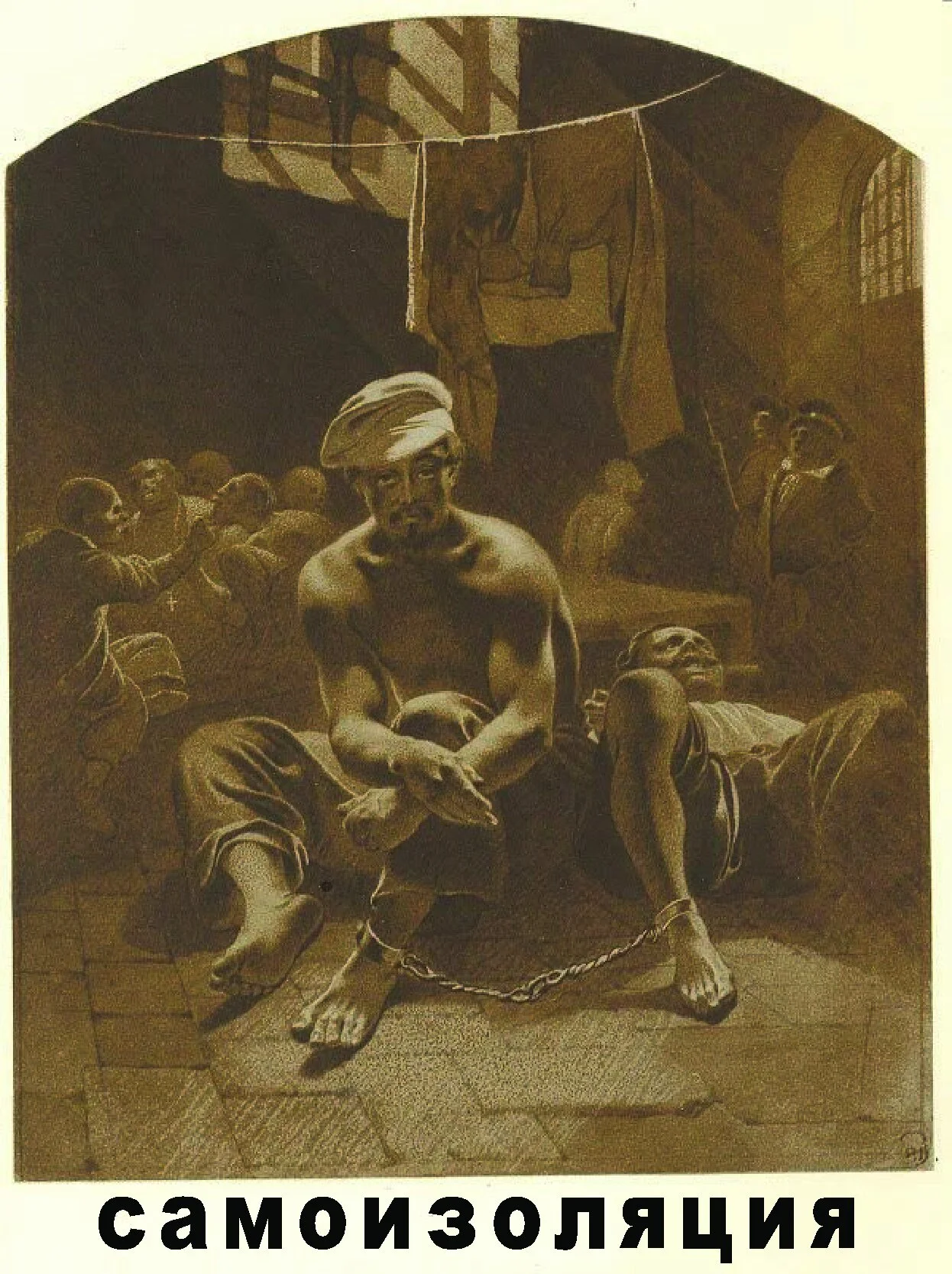
The feeling of longing when contemplating the Ukrainian landscape arises from the futile attempt to capture the nature of landscape changes; it is the feeling of “longing for home when you are already home“. The transformative potential of melancholic expectation comes in handy when considering contemporary ruins, as they reflect the state of our own time, allowing us to approach understanding an ambiguous future.
Today we can observe how a large number of artists take the path of social themes. They pay attention to architectural, urbanistic, ideological, moral destruction, explore economic phenomena or features of perception, etc. This trend is, of course, understandable, as the abundance of revolutions spurs the politicization of art, which romantically presents its ideals of existence in the society of the future, where everyone strives to be.
However, such engagement of art hides other motives and hidden desires. Turning to social themes in the post-Soviet space often carries an element of enjoyment of destruction. One can say that turning to the political serves as a cover for admiring the eternal end of the world.
Critical art becomes a pretext (a convenient frame, a screen) for the aestheticization of ruins. In such a case, critical art itself, as a method, no longer works. It does not create precedents for revising the foundations of social consensus, foundations of reality, etc., but rather serves as an aesthetic justification for holes in this reality.
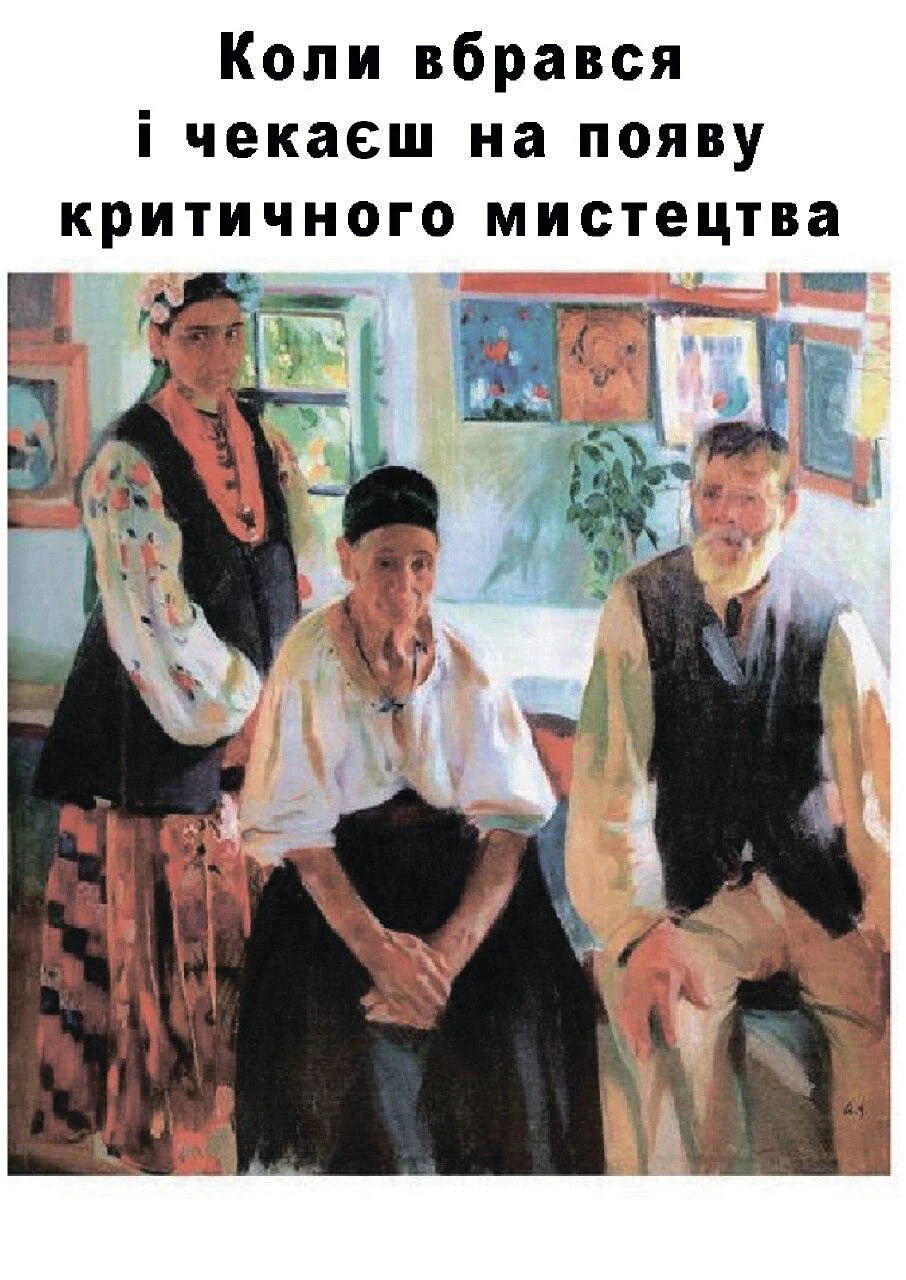
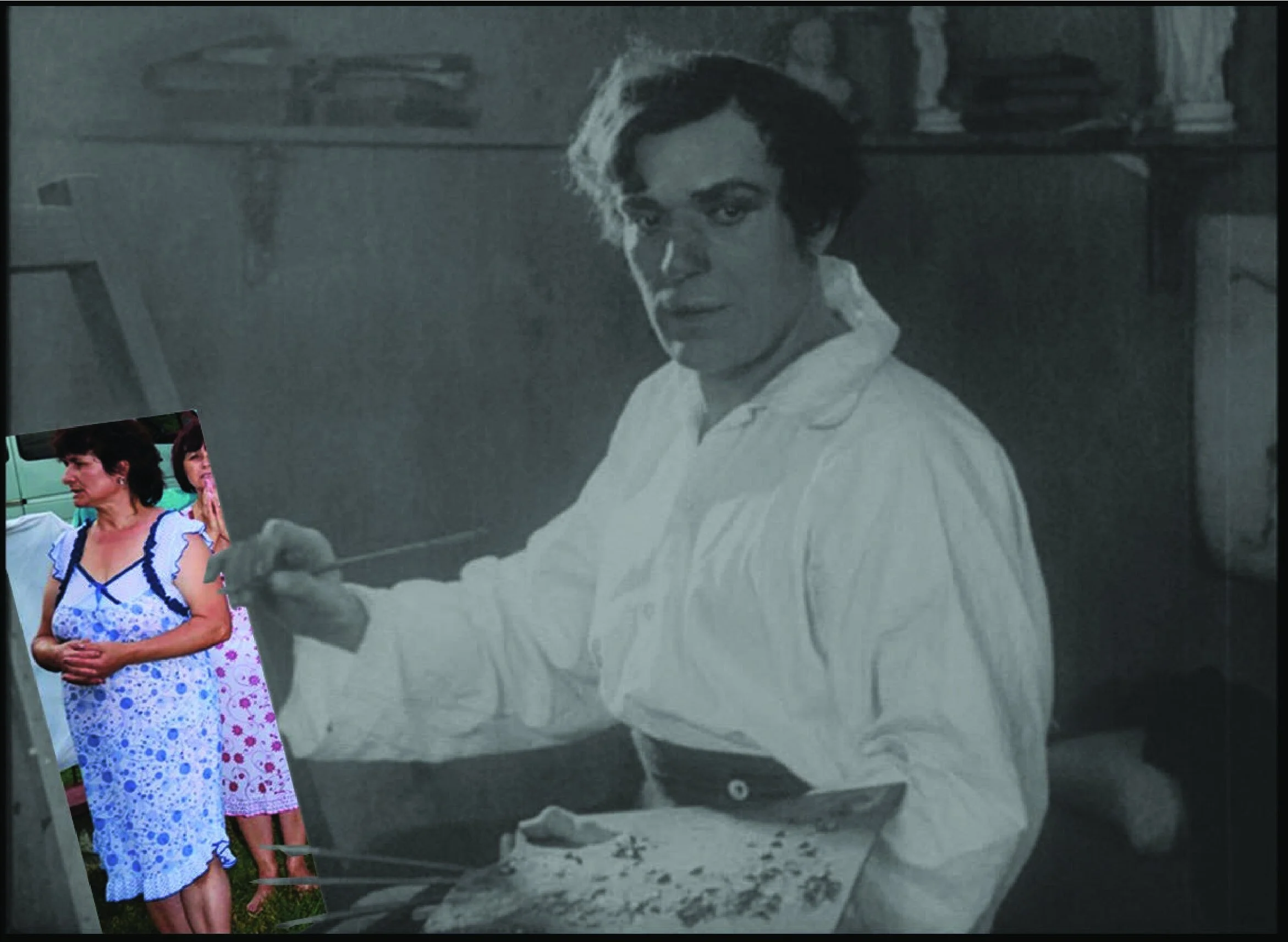
Illustrations were created using works by Oleksandr Burlaka and Volodymyr Melnychuk, Lev Zhemchuzhnikov, Nikita Kadan, Kyriak Kostandi, Bella Lohacheva, Boris Mikhailov, Oleksandr Murashko, Hryhoriy Narbut, Olena Subach, Korniliy Ustiyanovych, Taras Shevchenko, frames from the films “Taras Shevchenko” and “Blade Runner.”
[1] Rancière Jacques. Sharing the Sensible. – St. Petersburg: European University Publishing House in Saint Petersburg, 2007.
[2] Traumascapes: The Power and Fate of Places Transformed by Tragedy. Maria Tumarkin
Prepared based on materials from the PinchukArtCentre Research Platform
Valeria Karpan, Anton Usanov, Anastasia Khlyestova