Hannah Quinlan and Rosie Hastings
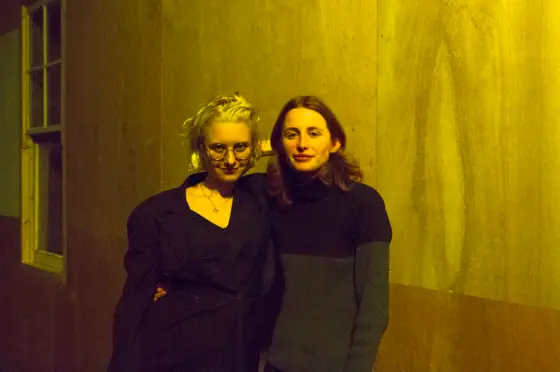
Hannah Quinlan and Rosie Hastings (Newcastle and London; both b.1991) are an artist duo based in London. Working across drawing, film, installation, performance and fresco, their practice examines the behaviours, history, politics, and artefacts of LQBTQ culture in the Western context. Quinlan and Hastings are committed to exposing nationalism, masculinity, and whiteness within the LGBTQ community and the effects on the community of state-led violence, including policing, gentrification, and austerity. Recent projects continue to be informed by The UK Gay Bar Directory (2016). Prompted by the rapid closure of gay bars, this work is a moving image archive featuring over 100 gay bars in the UK with duration of 4 hours. The artists are represented by Arcadia Missa, London and Isabella Bortolozzi, Berlin.
Hannah Quinlan's and Rosie Hasting's works for the Future Generation Art Prize 2021 investigate the history, politics, and aesthetics of LGBTQ+ culture. Working across film, drawing, installation, performance and fresco, Quinlan and Hastings address the sociocultural and political structures that reinforce conservatism and discriminatory practices within and around the LGBTQ+ community.
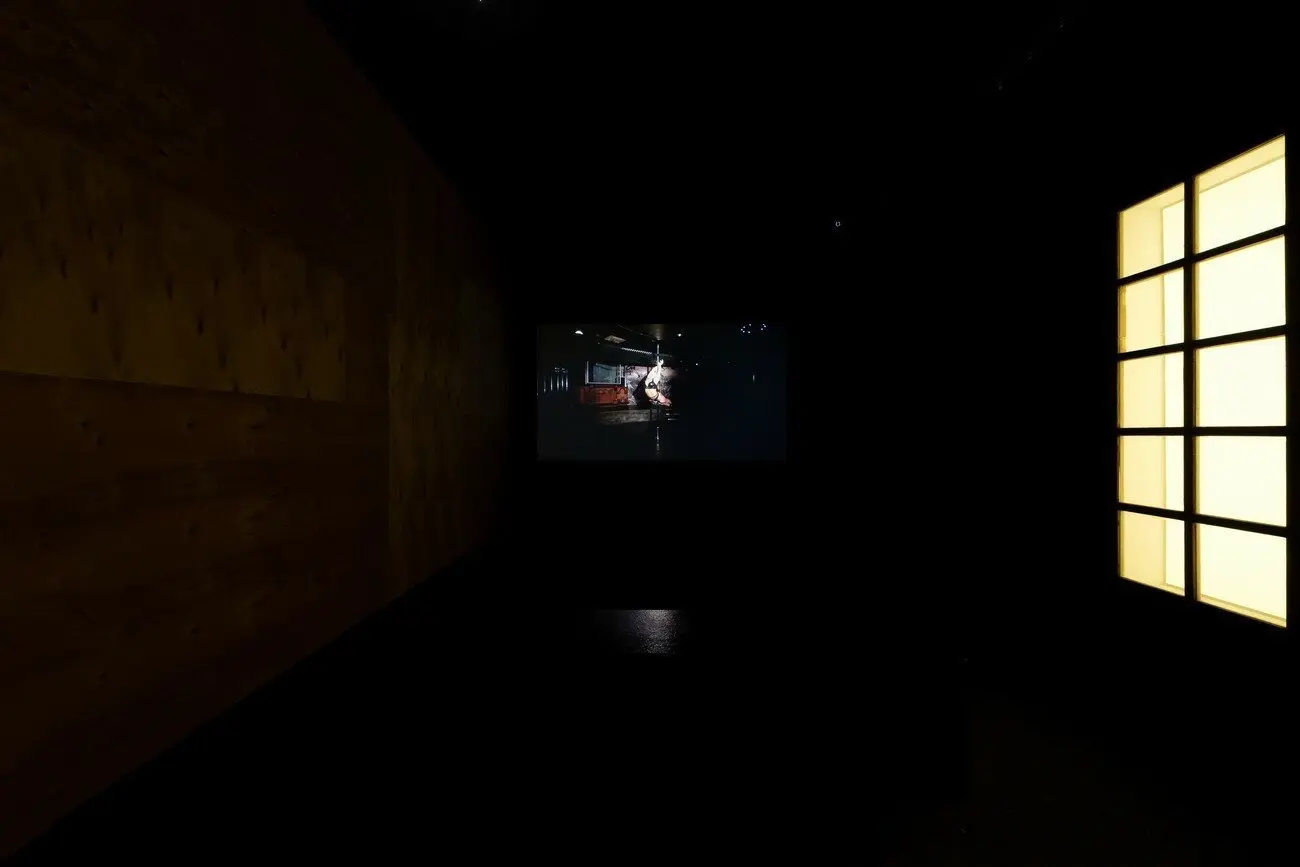
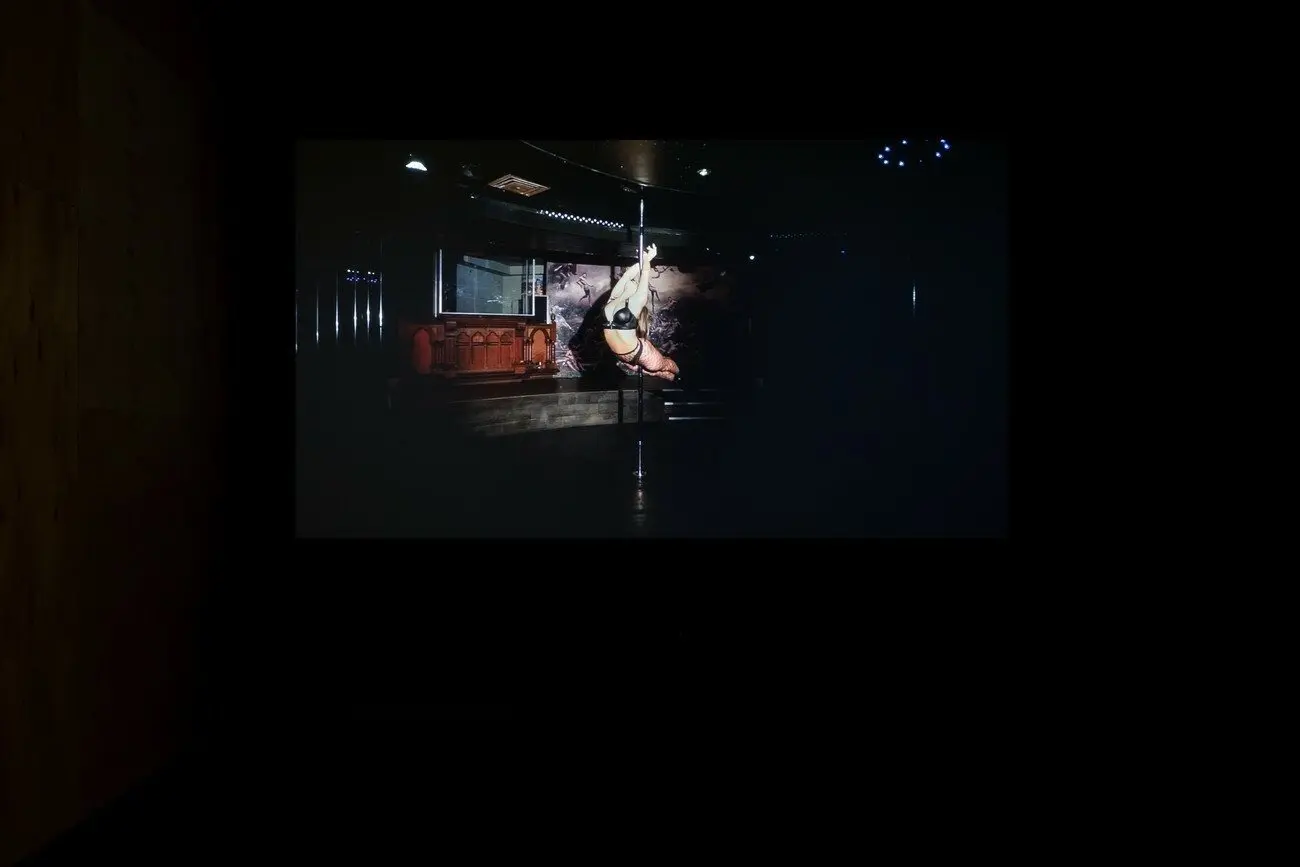
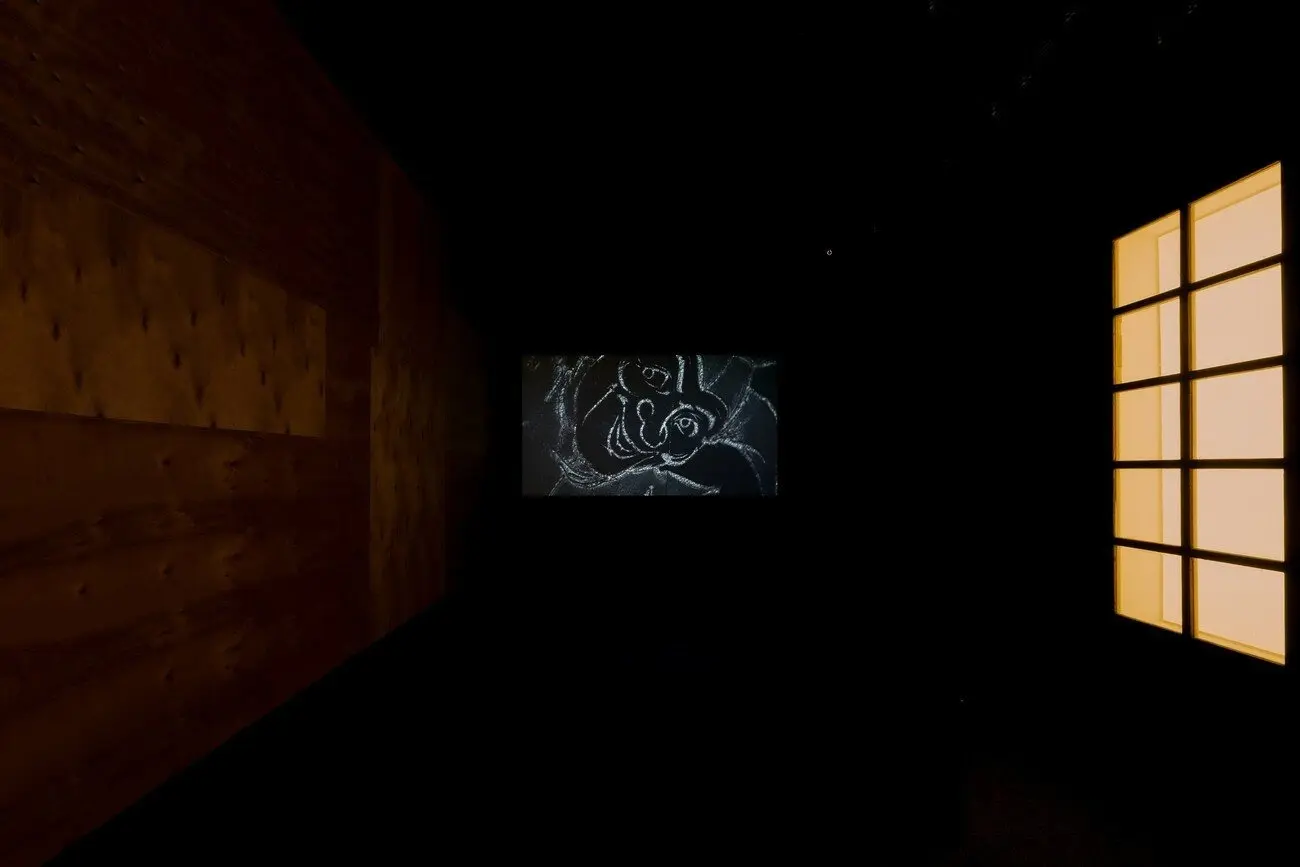
The film In My Room is a successive continuation of UK Gay Bar Directory, a moving image archive of gay bars that responds to the systematic closure of LGBTQ+ dedicated social spaces. Shot in Bar Jester and the Core Club in Birmingham's gay village and Shoeburyness Fort in Southend-on-Sea, In My Room explores how a culture of male sex in public and mens-only gay bars links to a broader culture of (white) male dominance socially, historically and culturally. Highlighting the impact of gentrification upon the city and its communities, the film explores the relationship between masculinity and capitalism, and suggests a subconscious reproduction of power in public space through behaviours, codes and gestures.
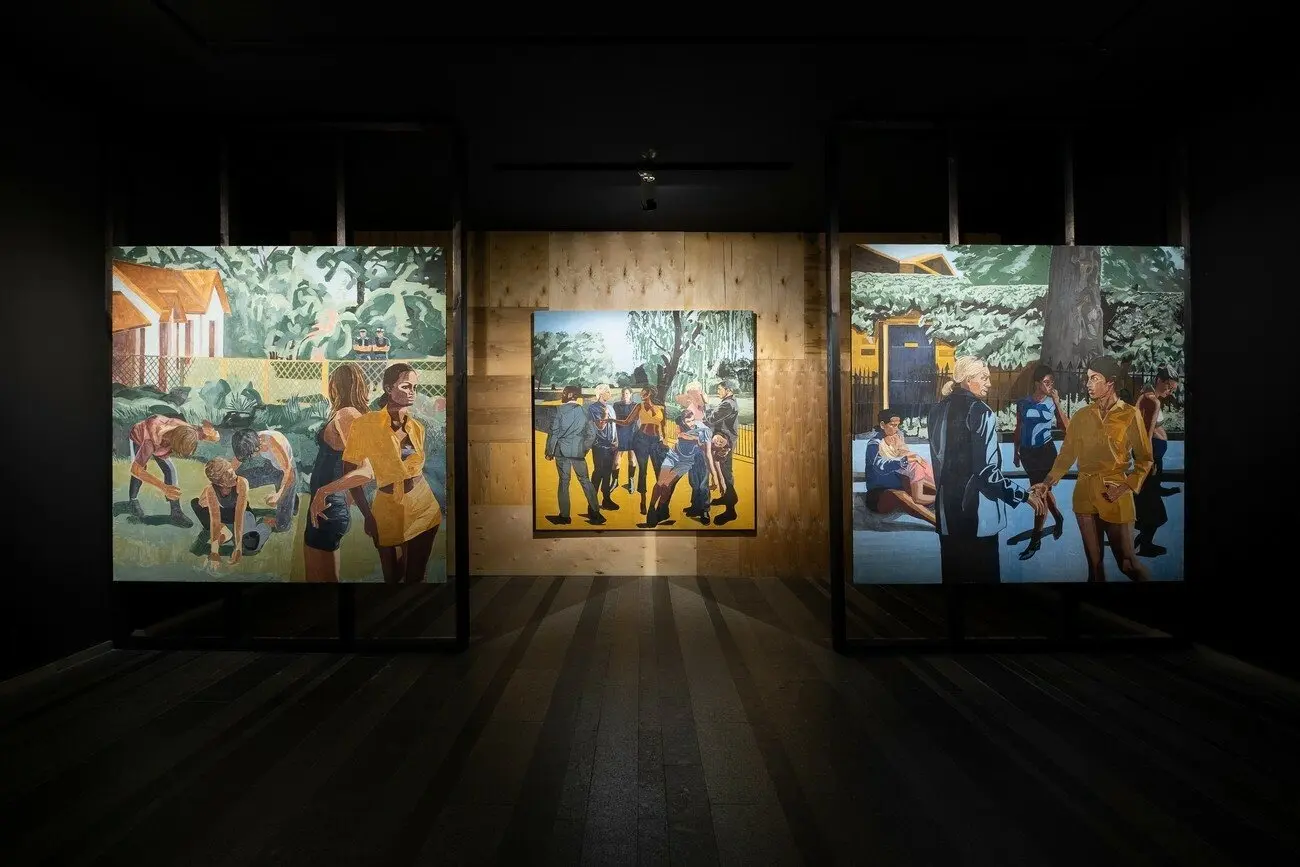
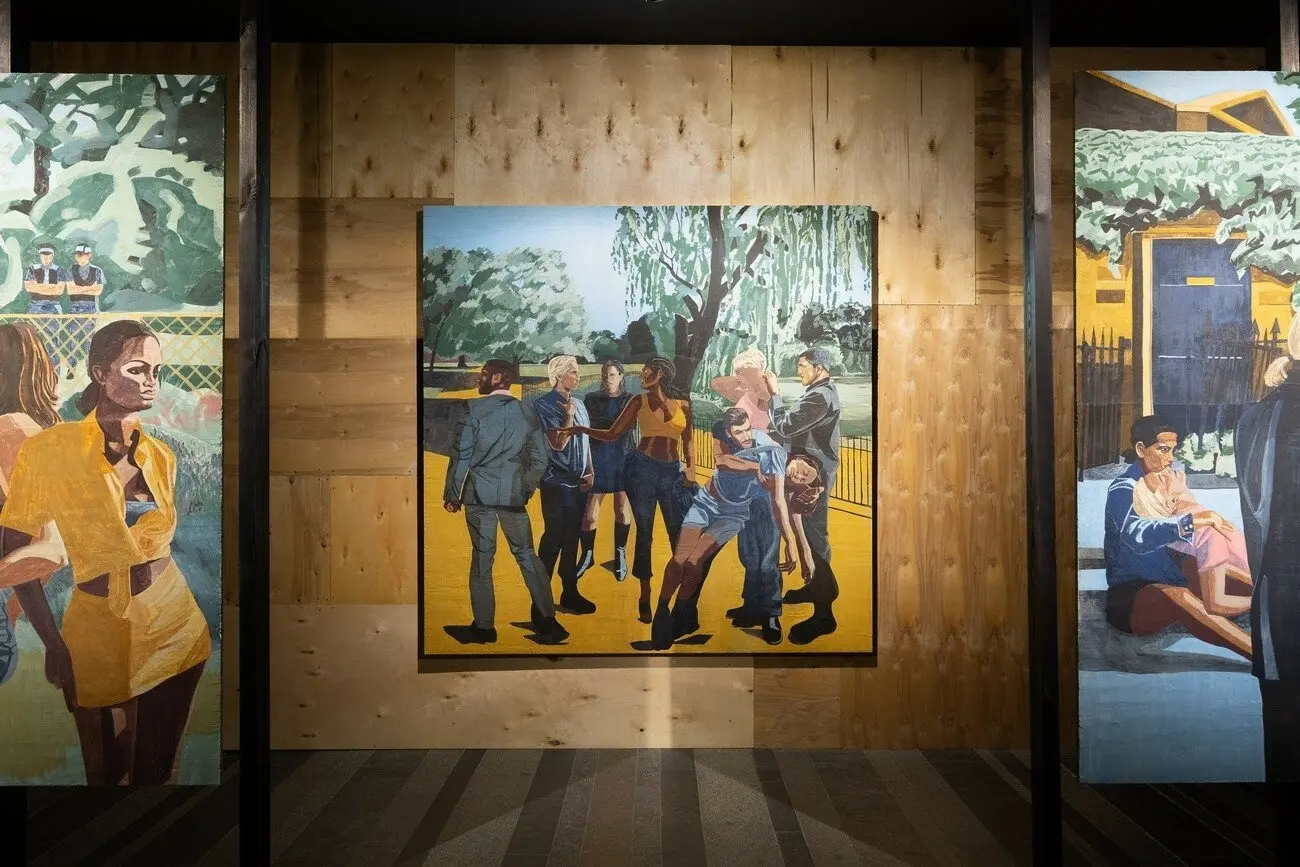
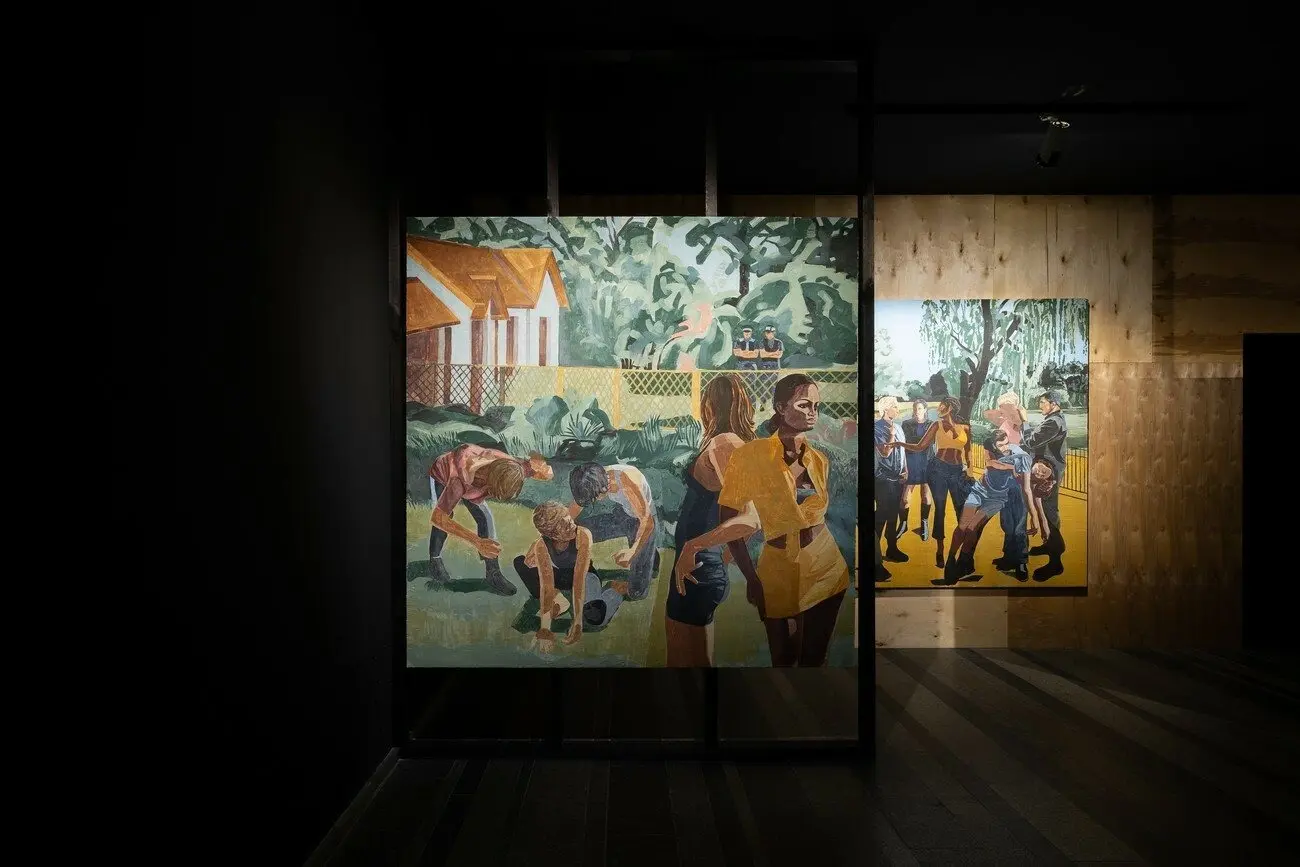
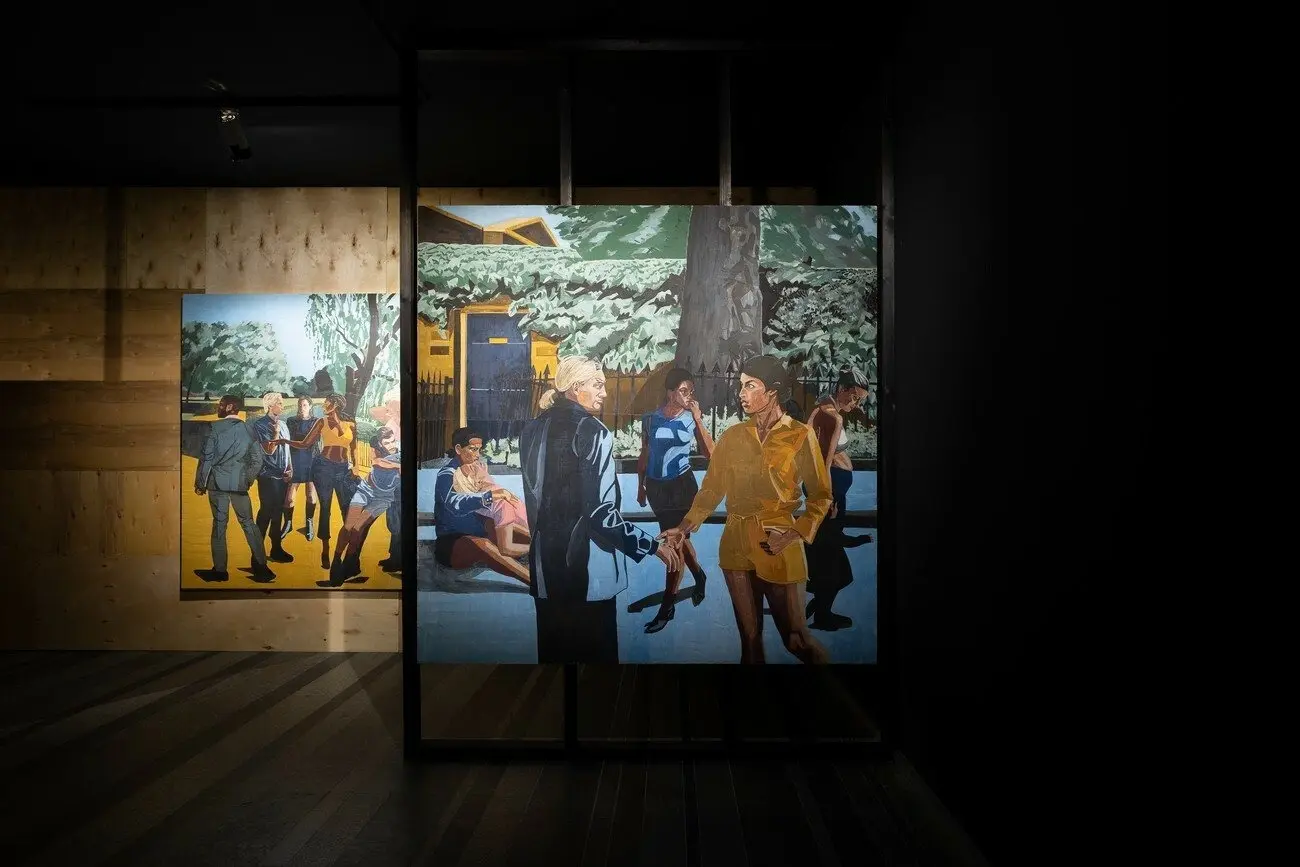
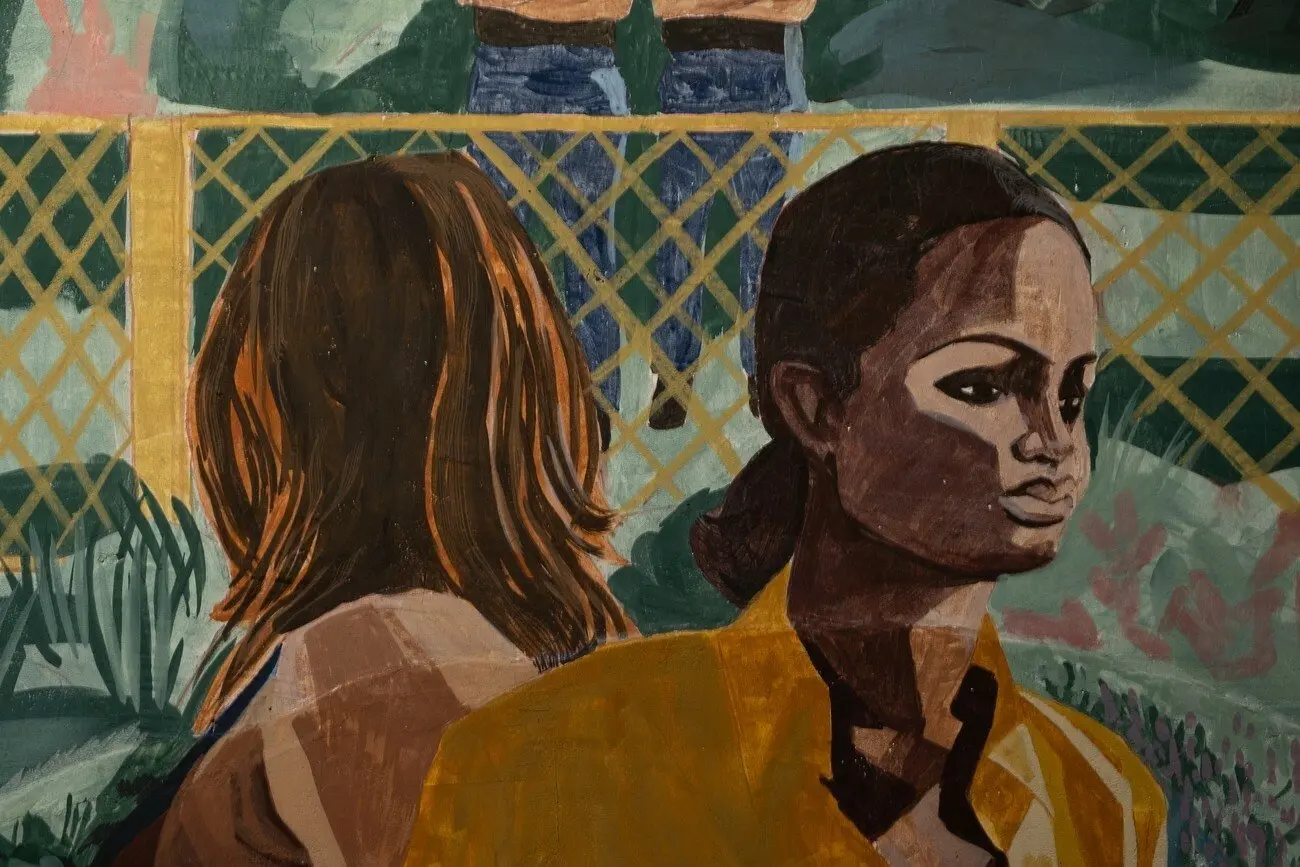
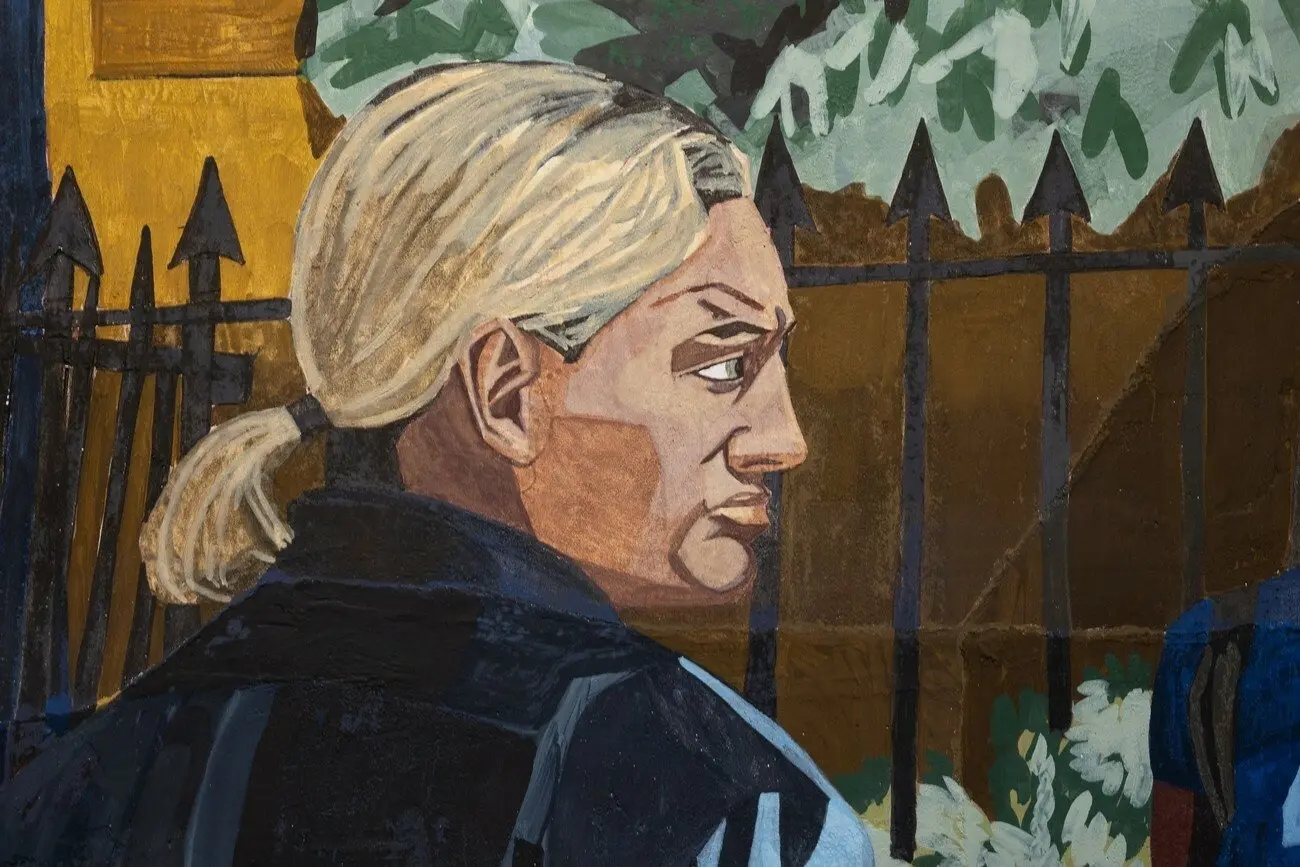
Public Affairs references hate crime legislation and reveals the inequalities between privileged and discriminated groups within the queer community. In this fresco series, the artists reconsider the role fresco has played in society and culture and the balance it strikes between ideology and symbolism. Given that fresco painting is often found in places of political, legal and educational importance, the artists have set these works in central London locations, such as Green Park, a zone of elite power but also the location of Gay Pride parades and a historic cruising ground for gay men. In these works, the artists depict images that represent this unruly clash of registers, such as the disciplining power of the state and the rebellious energy of the people who gather in these spaces.
Hannah Quinlan and Rosie Hastings (Newcastle and London; both b.1991) are an artist duo based in London. Working across drawing, film, installation, performance and fresco, their practice examines the behaviours, history, politics, and artefacts of LQBTQ culture in the Western context. Quinlan and Hastings are committed to exposing nationalism, masculinity, and whiteness within the LGBTQ community and the effects on the community of state-led violence, including policing, gentrification, and austerity. Recent projects continue to be informed by The UK Gay Bar Directory (2016). Prompted by the rapid closure of gay bars, this work is a moving image archive featuring over 100 gay bars in the UK with duration of 4 hours. The artists are represented by Arcadia Missa, London and Isabella Bortolozzi, Berlin.
Hannah Quinlan's and Rosie Hasting's works for the Future Generation Art Prize 2021 investigate the history, politics, and aesthetics of LGBTQ+ culture. Working across film, drawing, installation, performance and fresco, Quinlan and Hastings address the sociocultural and political structures that reinforce conservatism and discriminatory practices within and around the LGBTQ+ community.
The film In My Room is a successive continuation of UK Gay Bar Directory, a moving image archive of gay bars that responds to the systematic closure of LGBTQ+ dedicated social spaces. Shot in Bar Jester and the Core Club in Birmingham's gay village and Shoeburyness Fort in Southend-on-Sea, In My Room explores how a culture of male sex in public and mens-only gay bars links to a broader culture of (white) male dominance socially, historically and culturally. Highlighting the impact of gentrification upon the city and its communities, the film explores the relationship between masculinity and capitalism, and suggests a subconscious reproduction of power in public space through behaviours, codes and gestures.
Public Affairs references hate crime legislation and reveals the inequalities between privileged and discriminated groups within the queer community. In this fresco series, the artists reconsider the role fresco has played in society and culture and the balance it strikes between ideology and symbolism. Given that fresco painting is often found in places of political, legal and educational importance, the artists have set these works in central London locations, such as Green Park, a zone of elite power but also the location of Gay Pride parades and a historic cruising ground for gay men. In these works, the artists depict images that represent this unruly clash of registers, such as the disciplining power of the state and the rebellious energy of the people who gather in these spaces.
Exhibition